
Escape from Kareishu, or: Seiichi and Me
August 12, 2026 – Josh Donald
In the summer of 2025, I traveled to Japan with my old friend Sachi, who works with me at Bernal Cutlery, as our Japanese cultural liaison/interpreter/assistant buyer. Sachi herself is not old, but we’ve known each other for about a dozen years, since our sons, Henry and Nalin, became friends on their first day of kindergarten. They are now in their senior year of high school, each getting acceptance letters to colleges as I write this. Nalin also works behind the counter here at the shop on weekends and is a quick study.
Back to the trip in the summer of ‘25. Among other stops, we travelled from Kansai (Osaka, Sakai, and Kyoto) to the Noto Peninsula, stopping in Takefu, Kaga, and Kanazawa. All new spots for me. We were invited to visit the Noto Forestry Association's Office in the Noto Peninsula, which was slowly recovering from the earthquake on Jan 1, 2024. After a bumpy cab ride from Kanazawa (the only way to get there with limited infrastructure, as roads were still being repaired), we met the staff at the Forestry office and made our way into a conference room full of people in suits that made me feel under-dressed, and looking at them made me feel even hotter. I imagined passing out from heatstroke if I had to wear a suit in the 95-degree-plus humidity of a Japanese summer. I felt San Franciscan thoroughly as sweat ran down my back.
We were introduced to the head of the Kaga Lumber Company, Mr. Seiichi Masue, whose company supplies cypress and hiba for local homebuilding and produces non-toxic fireproof mineral-impregnated sugi cedar wood, all from trees managed by the Forestry Association. After this, we would visit an area of forest being managed by the Forestry Association and then have lunch.
During Kaga Lumber Company's presentation, we learned about their Noto Hiba Kara products made from water distilled from large kilns used to dry hiba lumber, as well as from hiba wood scraps and offcuts. The leaves and branches of felled hiba trees are also used, although they produce much less. Noto Hiba Kara is sold as an essential oil and as a spray distilled from kiln-dried hiba. Hiba, for those who are not familiar, is like a super hinoki: a little denser and a little oilier, with super-potent hinokitinol compounds. I was familiar with hiba wood, having had several cutting boards made from it, and had heard that a house built with hiba was supposed to repel mosquitoes for 10 years, compared with hinoki’s 3.
Sachi kept the translation coming at me clearly through the mountain of studies and scientific research into hiba: its antimicrobial and antiviral properties, its ability to neutralize MRSA, its strong mosquito repellent, its proven ability to relax people, and its odor-fighting qualities, which were especially useful in geriatric care. I thought about my sweaty back and how my backpack had started to get kind of ripe on this trip. Even though I was a little nervous that I needed some hiba spray and that I was a smelly foreigner, I was sweating a little less now that the AC had soaked in, and we all had glasses of cool tea. This comfort was to come screeching to a halt as we got back outside into the heat to go visit a patch of forest managed by the Forestry Association.
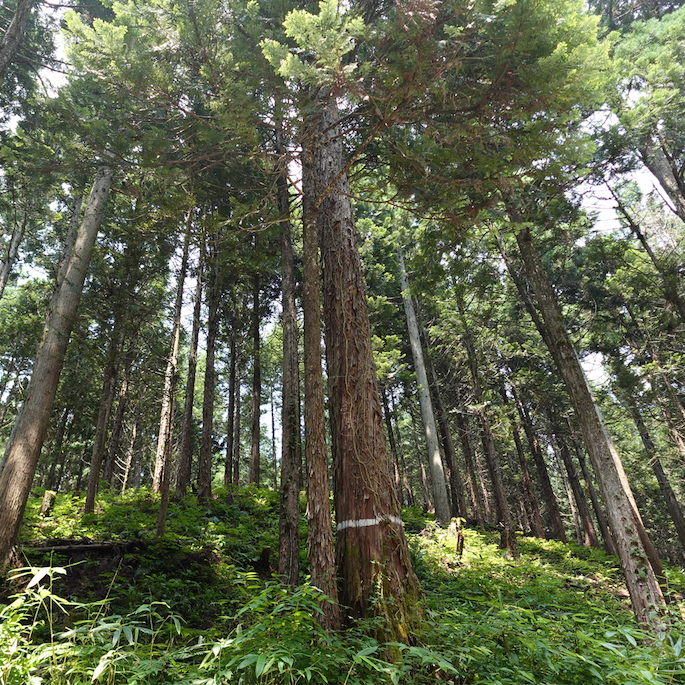
I was a little nervous that we would be shown a stubbly, clear-cut hillside and would need to be polite and enthusiastic, but what I saw was anything but that. Management was done with a 100-year plan in mind; trees selected for cutting were spaced out in increments of up to 100 years. Trees to be harvested eventually had smaller trees around them thinned to provide more room for slow growth and airflow. Small trees were used for making urushi lacquer. Aside from making essential oil and hiba spray from the scraps and excess bark and leaves of hiba, Kaga Lumber Company also produces local products from scrap material and looks to engage with the local economy whenever possible.
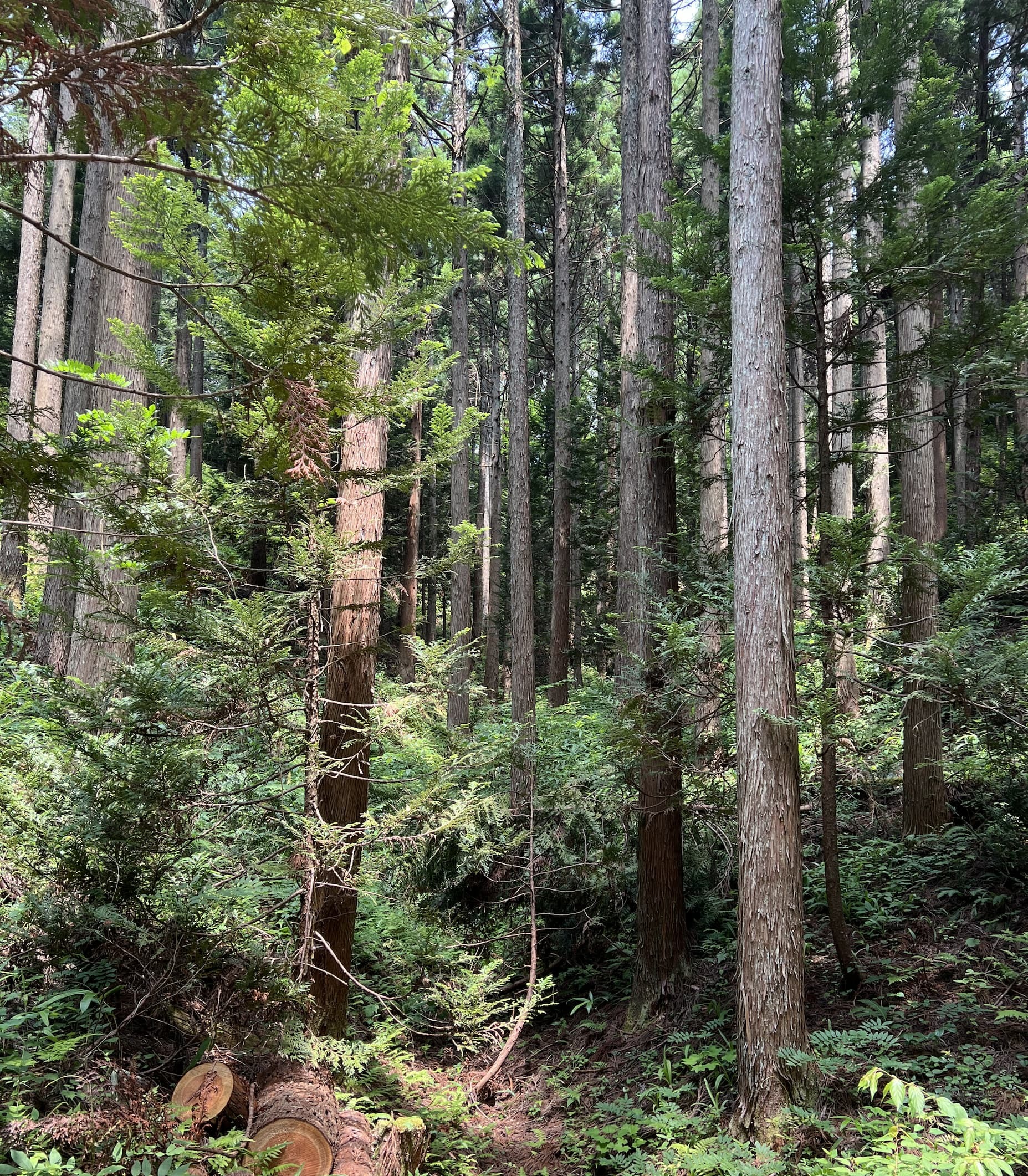
Trees managed by the Noto Forestry Association
People who visit Japan and only see certain parts of Tokyo might miss the fact that much of small-town and rural Japan is a little down at the heels. Aside from the usual sluggish economic climate and shrinking rural population discussion, there was an additional heaviness to the aftermath of the earthquake destruction. People had been trapped in their homes, unable to get around with so many roads destroyed, and even after the roads were fixed, many people were living in temporary housing in parking lots and schoolyards. Towns whose entire income came from visitors to large onsen hotels vanished as the hotels were condemned and were now vertical rubbish heaps. Nobody felt the repairs were happening fast enough, and the ongoing massive labor shortage of rural Japan was again so obvious.
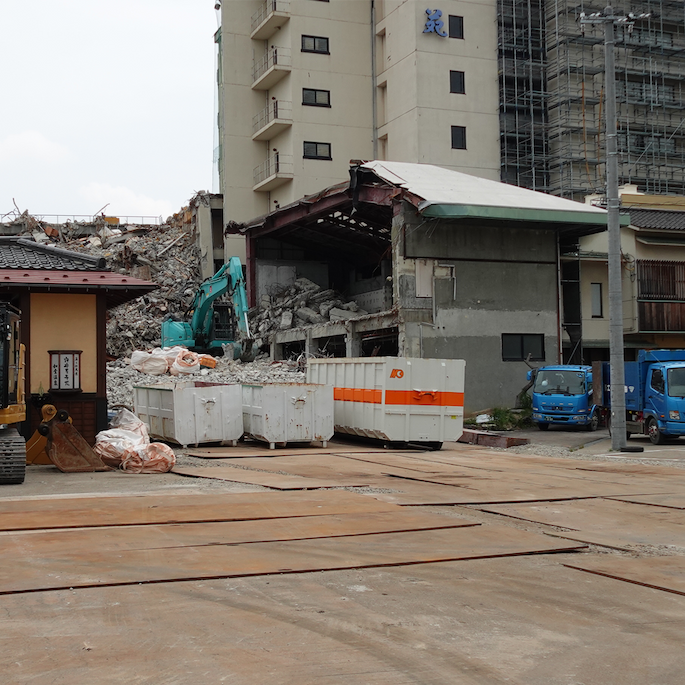
Some of the aftermath of the Jan 1st, 2024 earthquake.
Back in the car on our way to lunch, things were a little more relaxed. There was a discussion between Sachi and the Kaga Lumber Company employees about how, during the presentation, the word “kareishu” was used. The presenter was a little embarrassed and said he was so nervous he could not remember what he said during the presentation, then started laughing. Sachi explained that “kareishu” means “old man smell”; there was a good deal of giggling in the car. I noted the value this word might have in casual conversation.
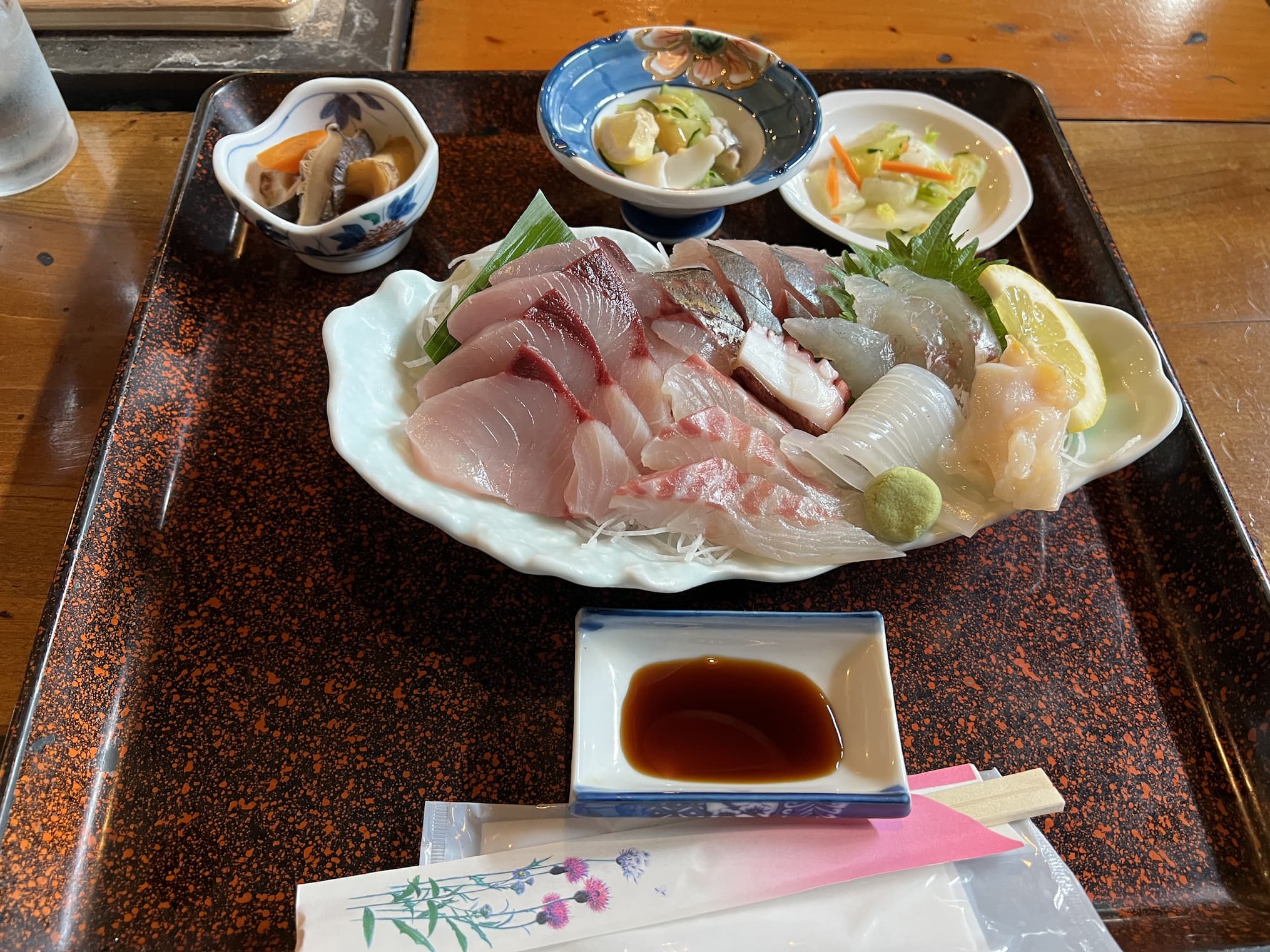
Lunch was sashimi at a little roadside restaurant that was near a small bay with several boats up on trailers and a few more in the water. I believe there was a hand-painted mermaid on the side of the building. Time had almost stood still inside the restaurant since the late 80s, except that the youngest person working there was in their early 60s. Old woodwork and fluorescent lights are always a good sign in Japan. It was simple but mind-blowingly good. Small dishes of simmered shiitake, carrots, and burdock; cucumber, bamboo shoots, and lemon; napa tsukemono pickles; and a big plate of sashimi with lots of cold tea for me. Other people had a cold beer. Afterward, a mention of kareishu was made, and Kazuyo, the wife of the president of Kaga Lumber Company, announced that it is especially useful for spraying on her husband's pillow. The tension of a business meeting was now officially broken, and roaring laughter and 20 minutes of kareishu jokes followed. At the end of the meal, Seiichi and I had our picture taken together behind a wall of signatures from famous people. He joked that someone who sees this picture would think he had met Michael Moore. I left still chuckling and with a new bottle of Notohibakara spray. Was I relieved I was just the fat foreigner instead of the smelly foreigner?
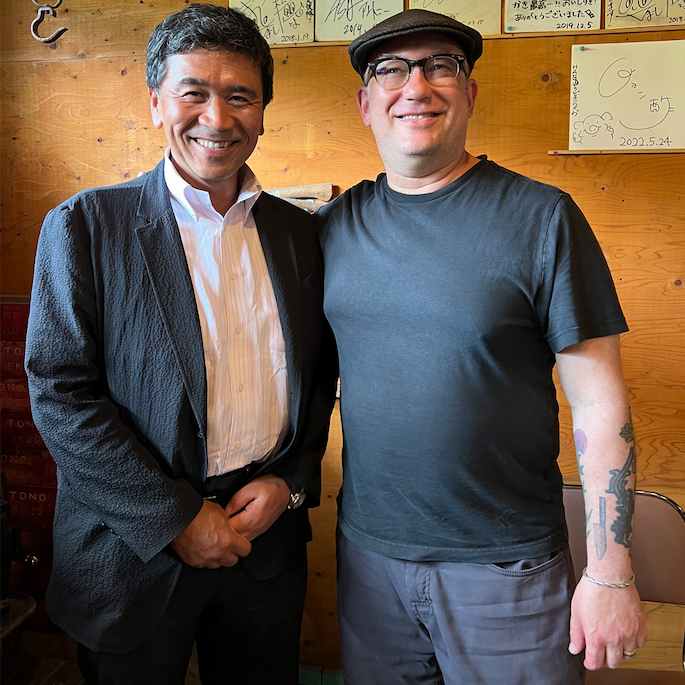 Mr. Seiichi Masue, head of the Kaga Lumber Company, with Bernal Cutlery co-founder Josh Donald
Back in the 1980s era hotel we were staying in (which was like staying in my grandparents' house if my grandparents were Japanese), the Notohibakara spray came in handy. Walking into my room (with my back again sweaty), it was like walking into a mildewy sauna. The Notohibakara came in super useful, fighting the mold smell, but ultimately the mold kicked my ass again with the central air conditioning blowing it in all night. I woke up and thought I had the flu or COVID and wore a mask for a couple of days until I recovered, but my backpack smelled way better for the rest of the trip, and I’m pretty sure I did not have kareishu when making kareishu jokes at every business meal afterwards on the trip.
Update: I just ran through my bottle of Notohibakara spray, and will be picking up another one at the shop when I get back to work tomorrow. Until I can afford to build a house out of hiba, I will definitely make sure I have a bottle of it available to fight off any kareishu and all the mustyness that my 90 lb German shepherd and poorly potty-trained 5 lb Pomeranian/Chihuahua mix puppy can provide. Hopefully, it also distracts from any future Michael Moore jokes, too.

Mentioned in article: Hiba Essential Oil Spray