
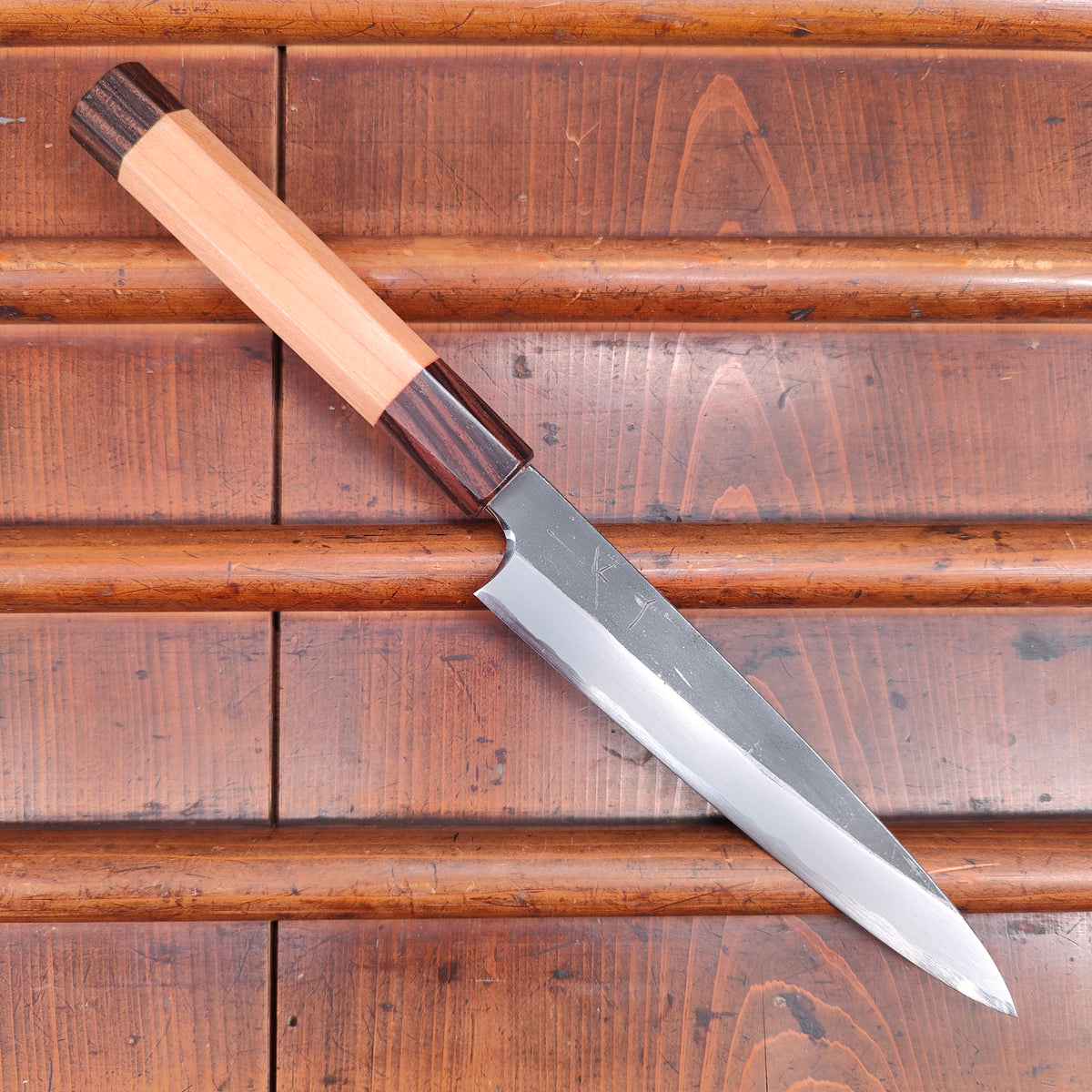
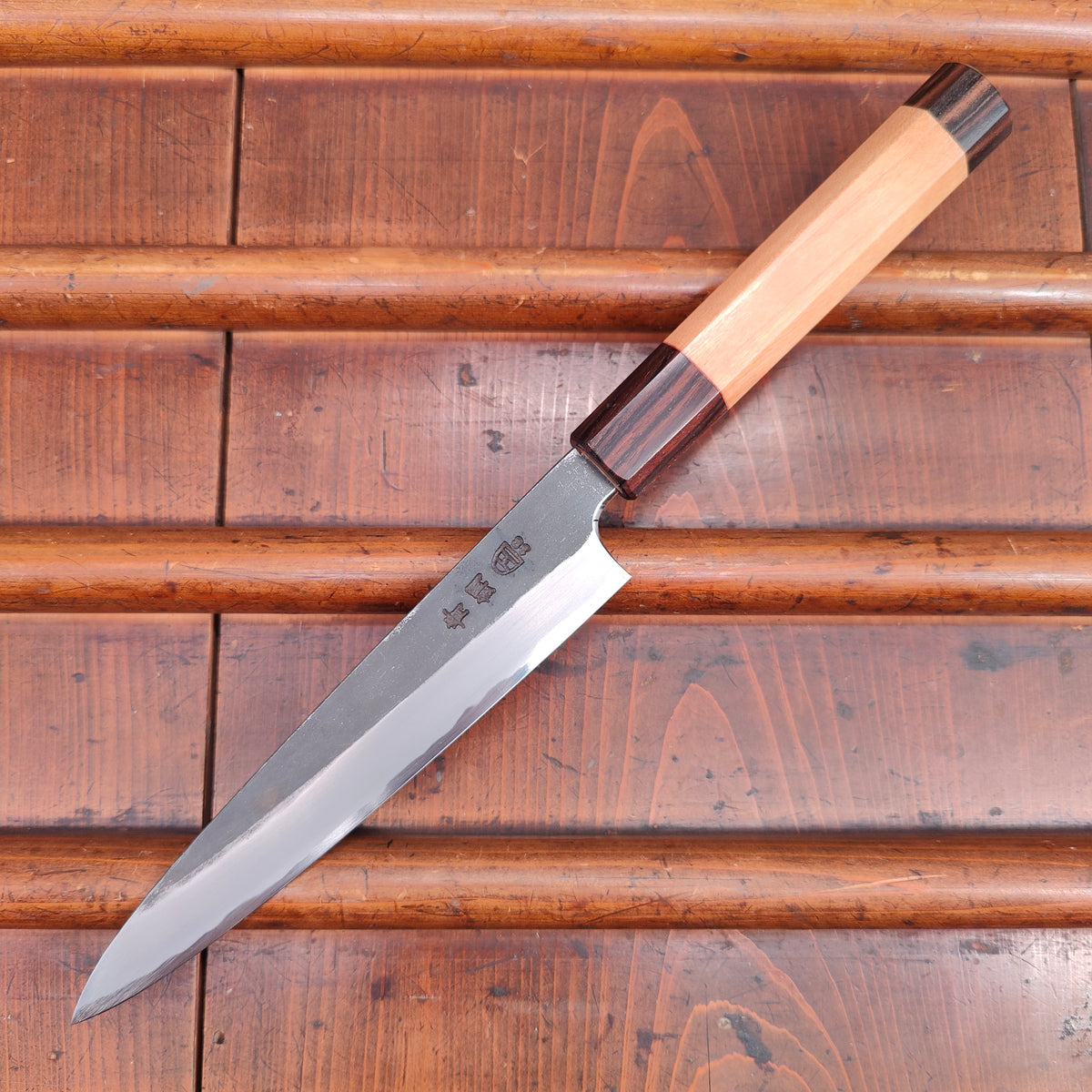
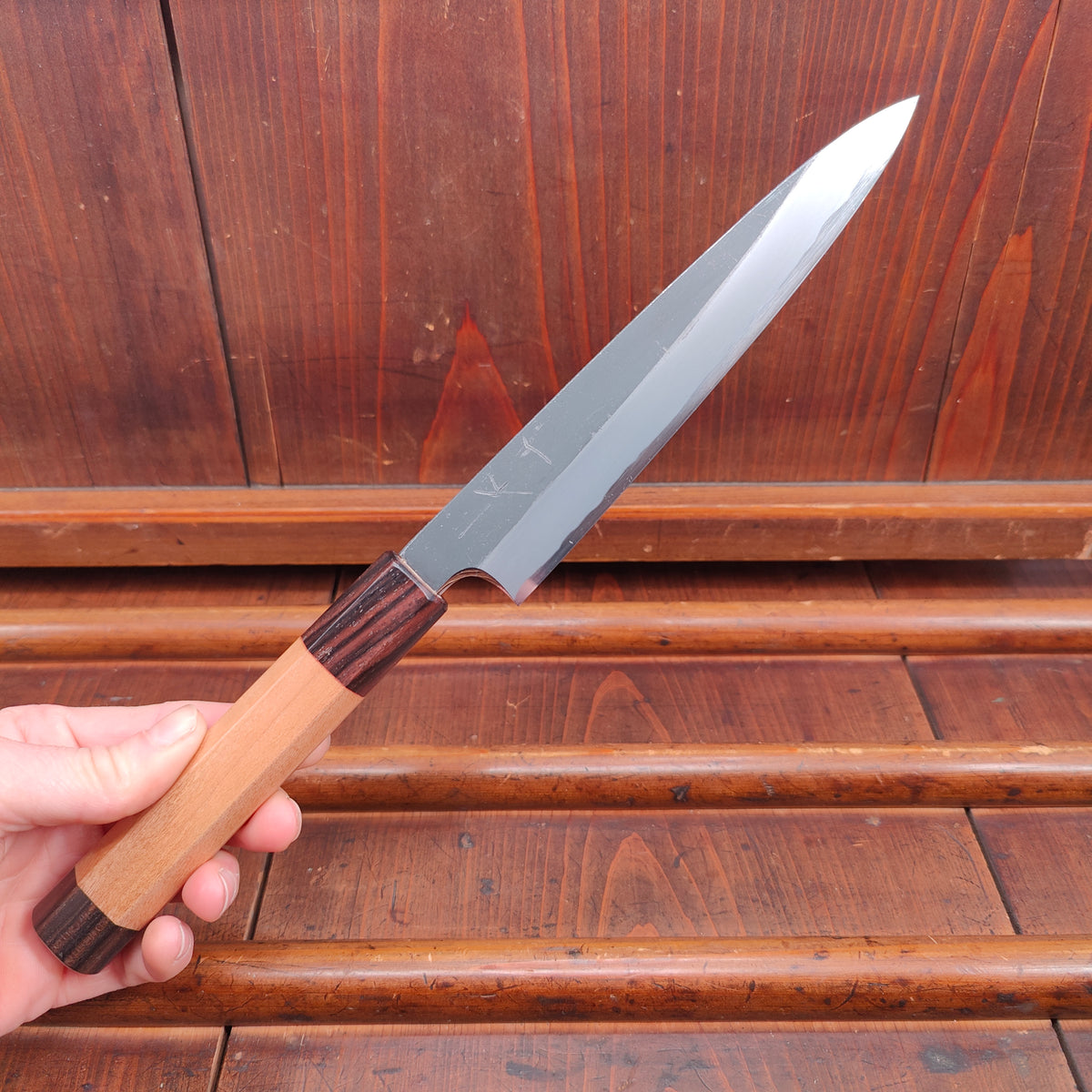
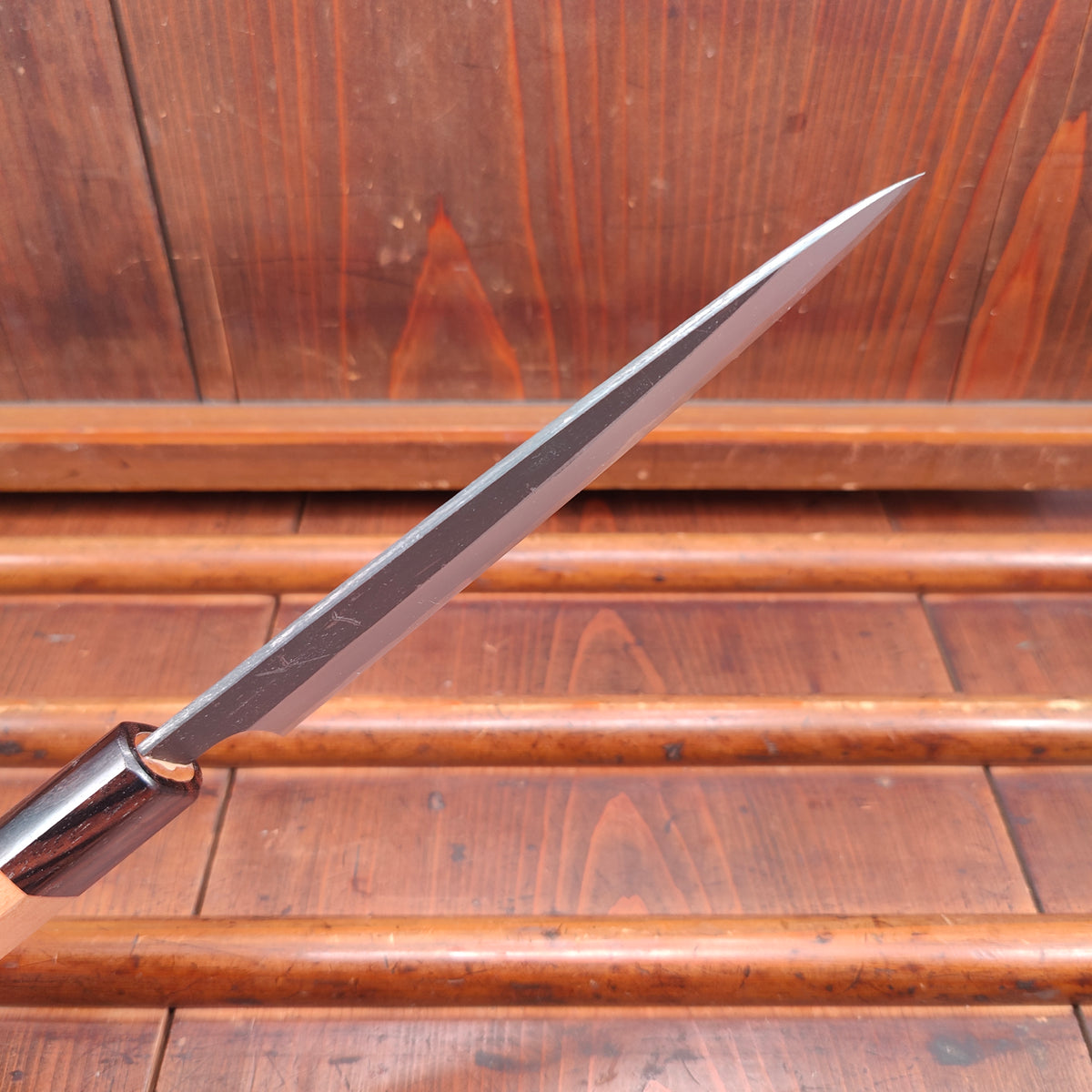
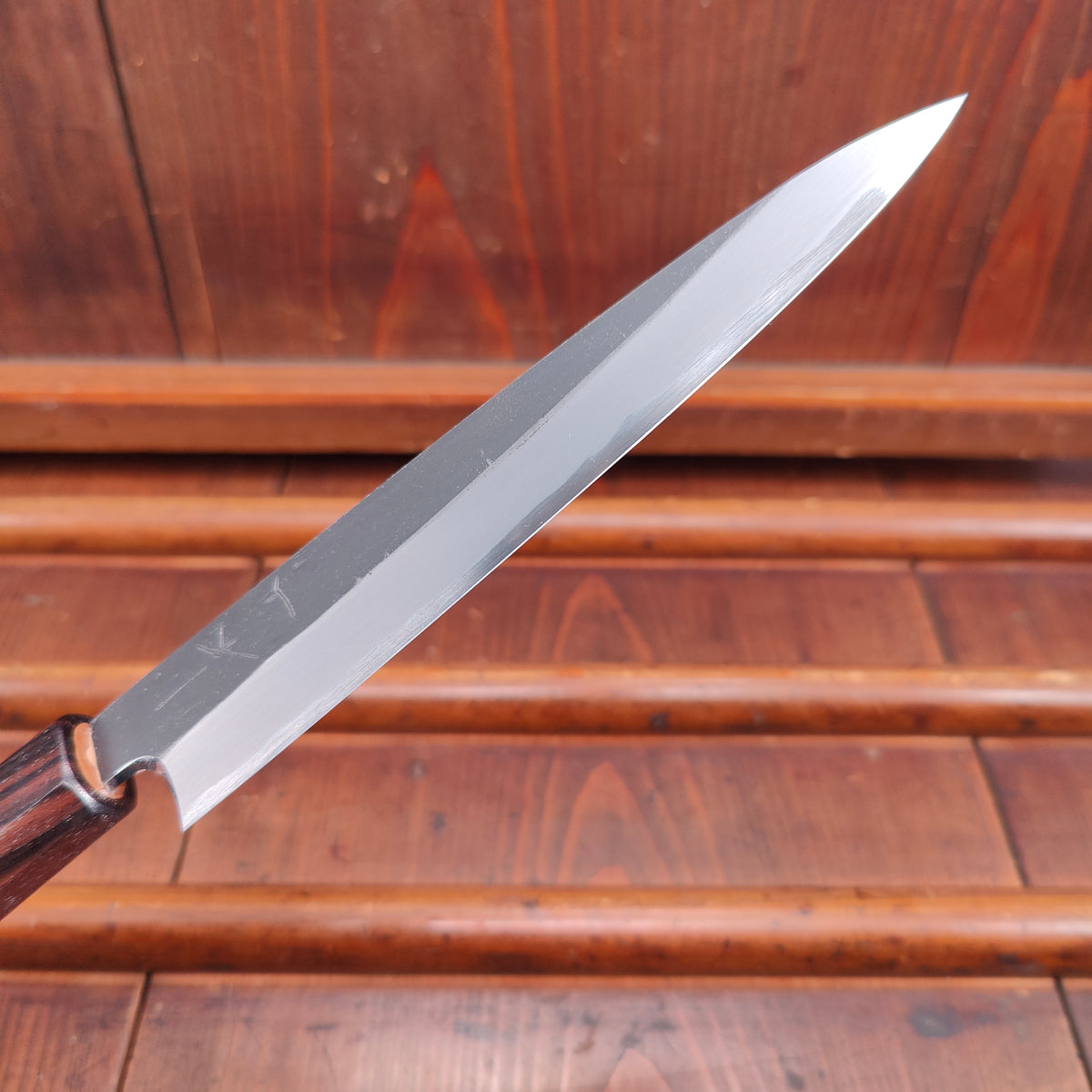
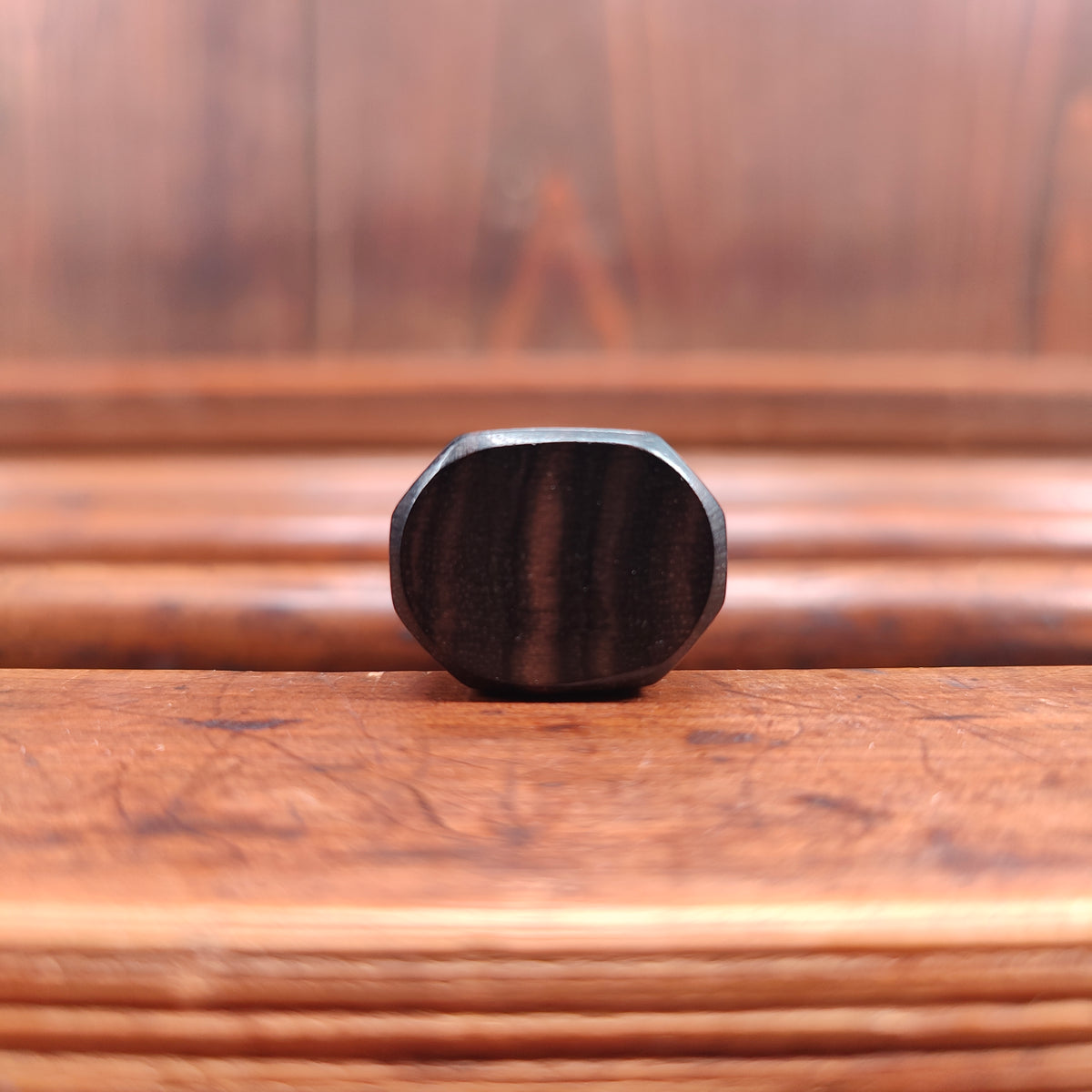
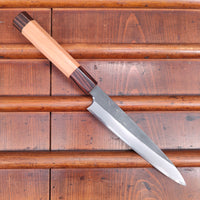
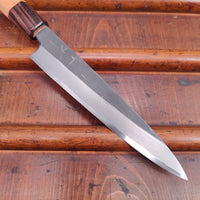
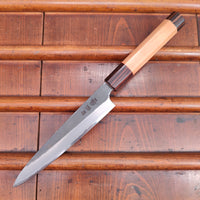
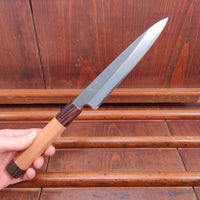
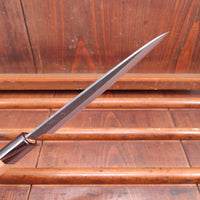
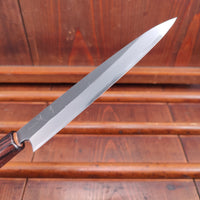
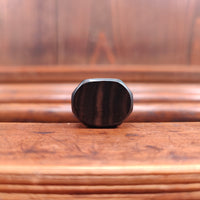
Hitohira Togashi 165mm Petty Aogami 2 Kurouchi Cherry Handle Ebony End
-
Regular Price
-
$460.98
-
Sale Price
-
$460.98
-
Regular Price
-
Sold Out
-
Unit Price
- per
- Regular Price
- $460.98
- Sale Price
- $460.98
- Regular Price
- Unit Price
- per
Hand made in Sakai forged by dentoukougeishi master smith Kenji Togashi and expertly ground by his son.
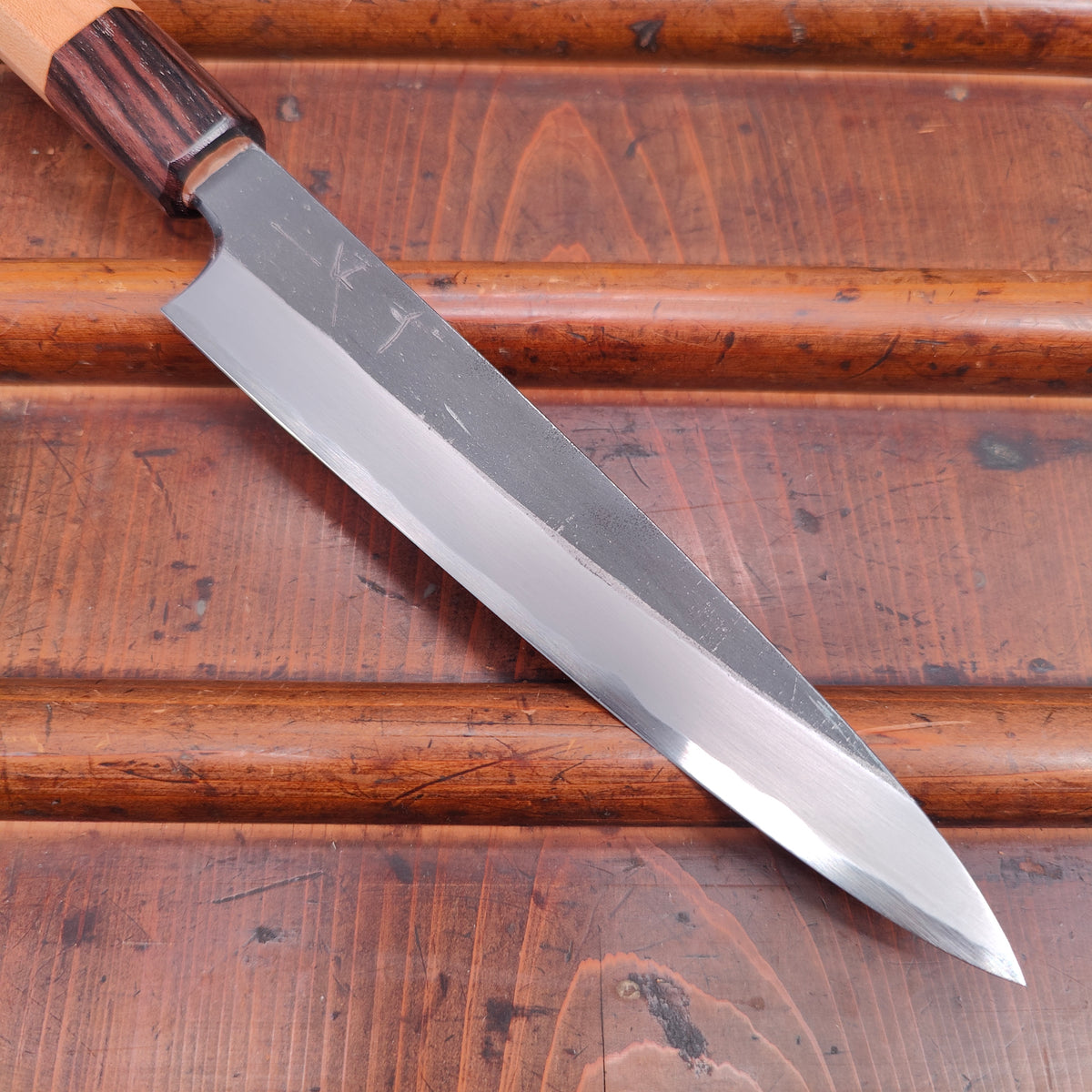
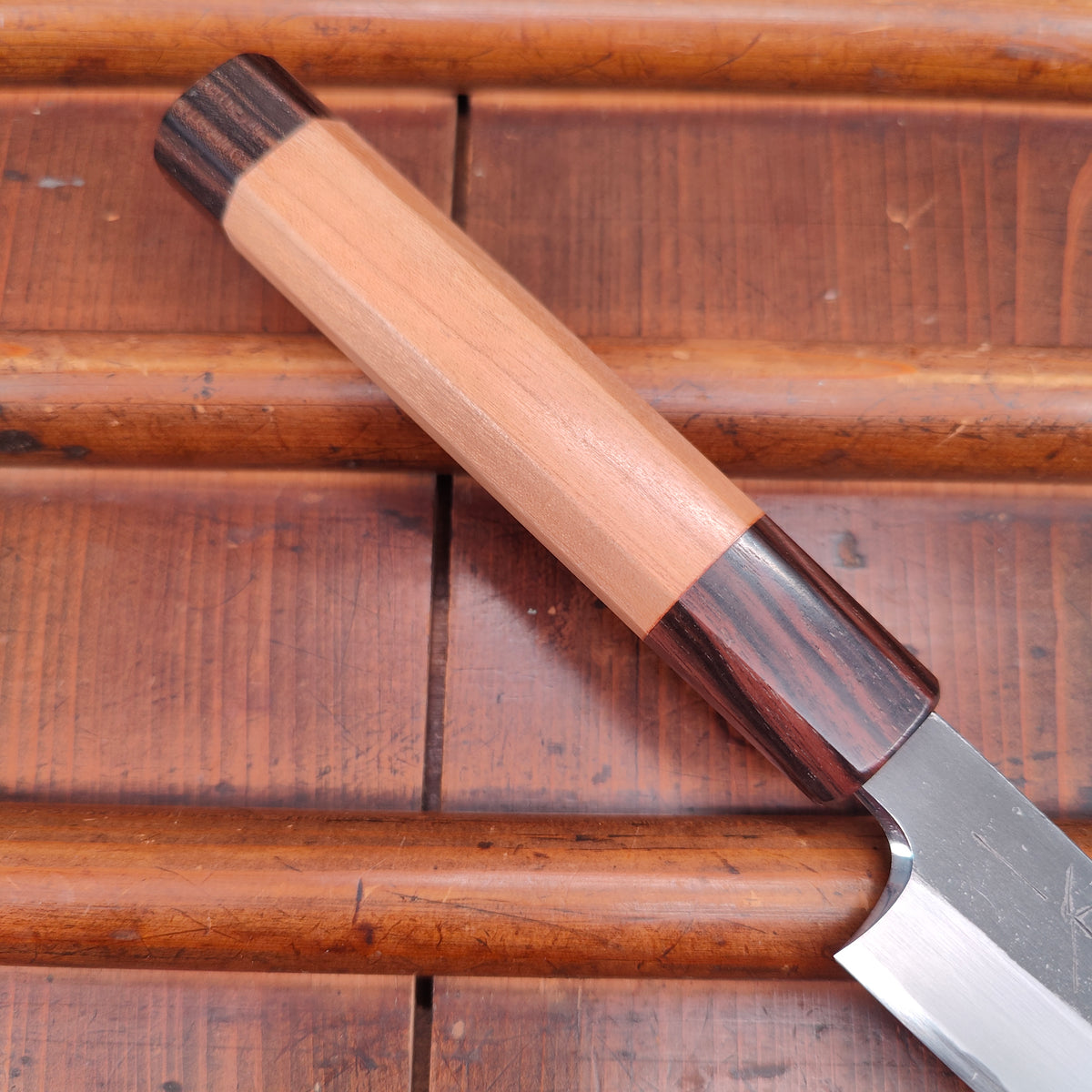
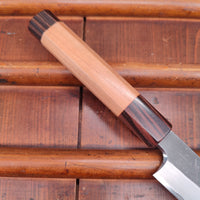
These are super easy to sharpen with a long edge life and smooth cutting feel with nicely finished corners. Slightly larger than usual geometry for a Sakai gyuto, but still following that style. Macasser ebony and light colored horn handle are a nice compliment.
Octagonal Cherry wood shaves a little weight off and makes for a very secure grip even when wet or greasy and is highly rot and bacteria resistant.
Please note: These are rustic style knives with a top shelf forging and heat treatment. They have a natural kurouchi finish that is formed after forging and heat treatment and not removed, rather than applied after grinding. Blade thickness and weight will vary as well having hammer marks that can be seen in the kireba bevel and rough forged face. There can be light scuffs or cosmetic irregularities on the kurouchi finish due to its natural occurrence.
About This Knife


Petty

Total Length: 292mm
Edge Length: 155mm
Heel Height: 29mm
Spine Thickness: 1.9mm
Weight:
Orientation: Ambidextrous
Steel Type: Aogami 2 (Blue Paper #2)
Steel Hardness (HRC):
Maintenance: More Attention
Handle Type: Japanese (wa)
Handle Material: Cherry with Ebony Ends

Dive Deeper
Medium-Fine finish - Japanese
Sharpening Supplies
Stones & Accessories selected specifically for this knife.
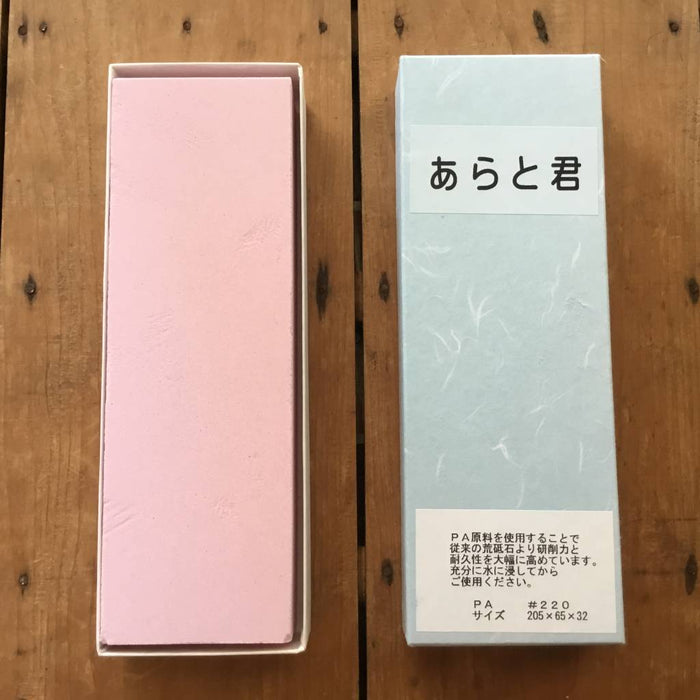
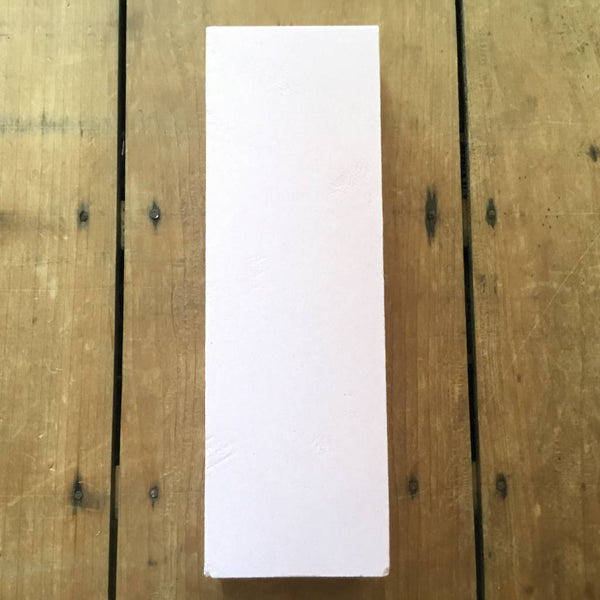
Arato-kun #220 Extra Coarse Grit Whetstone
- Regular Price
- $73.17
- Sale Price
- $73.17
- Regular Price
-
- Unit Price
- per
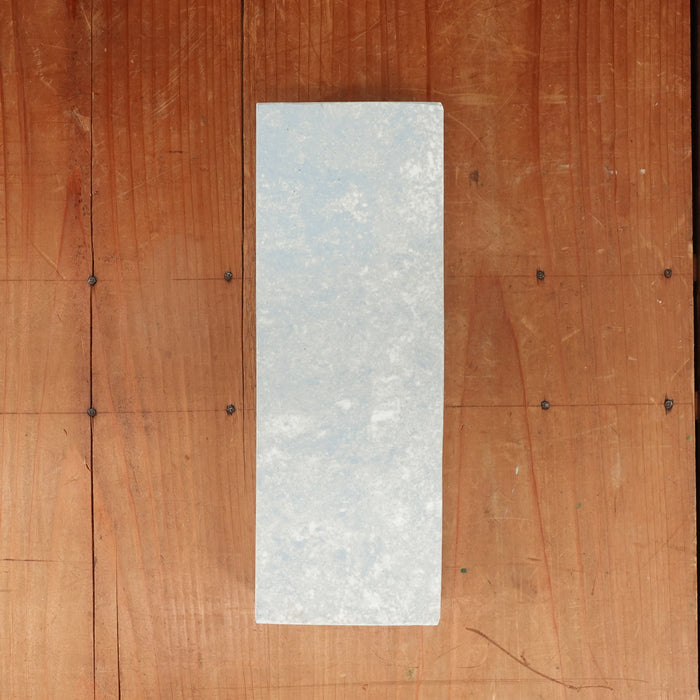
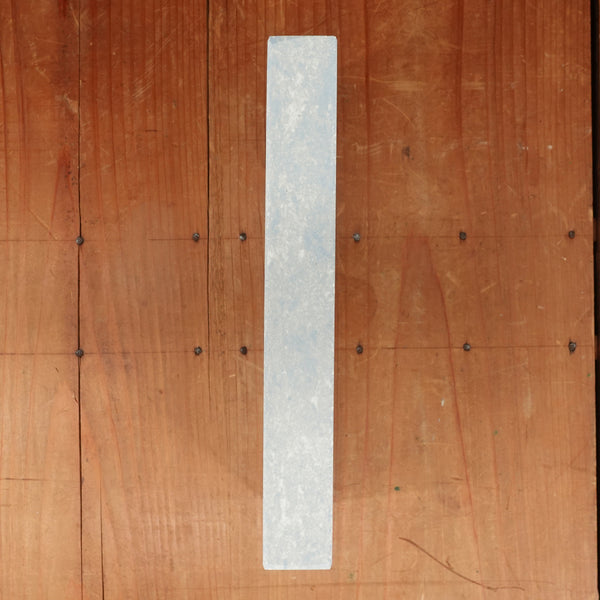
Bernal Cutlery Takarazukushi 1200 Grit Blue Marble Semi-Soft Ceramic Japanese Whetstone
- Regular Price
- $108.29
- Sale Price
- $108.29
- Regular Price
-
- Unit Price
- per
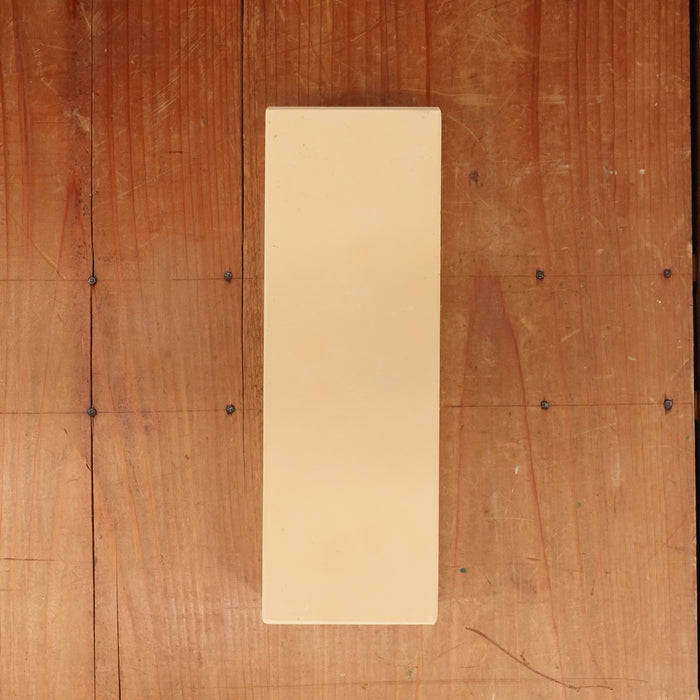
Bernal Cutlery Takarazukushi 4000 Grit Yellow Semi-Hard Resinoid Japanese Whetstone
- Regular Price
- $120.00
- Sale Price
- $120.00
- Regular Price
-
- Unit Price
- per
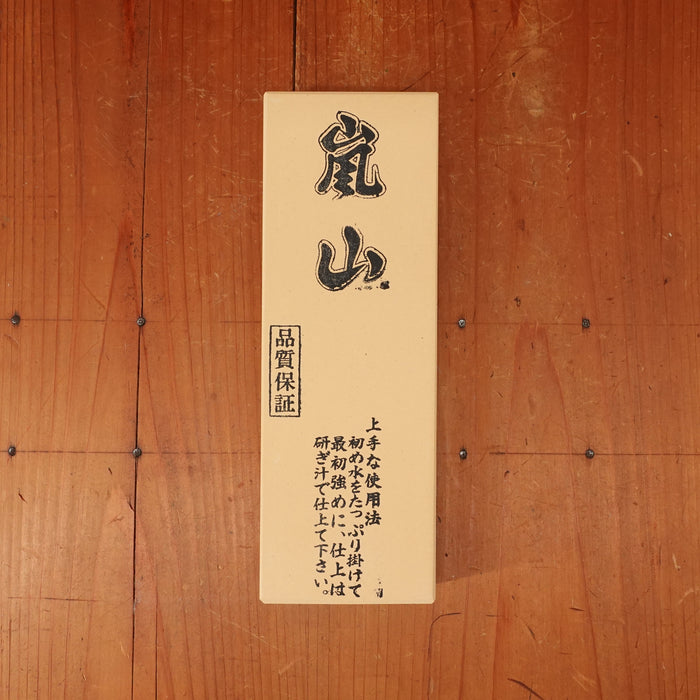
Arashiyama #6000 Whetstone Stone NO Wooden Base
- Regular Price
- $84.88
- Sale Price
- $84.88
- Regular Price
-
- Unit Price
- per
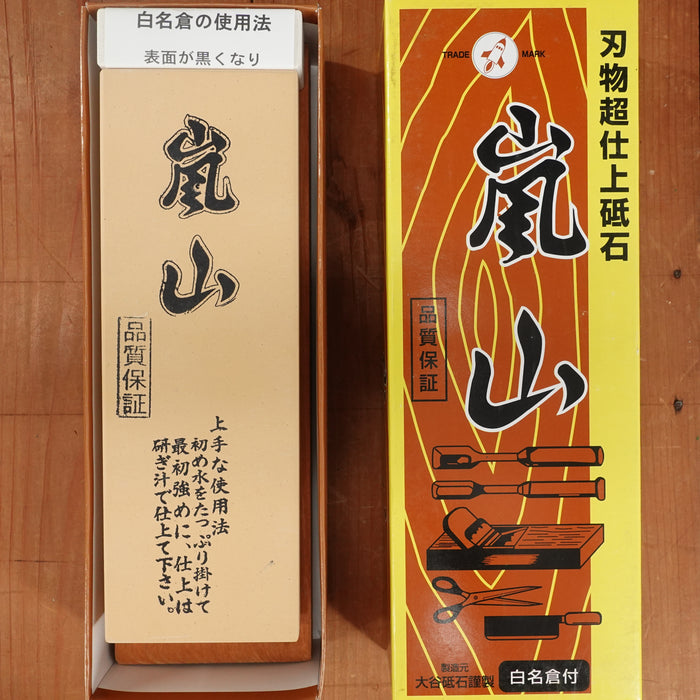
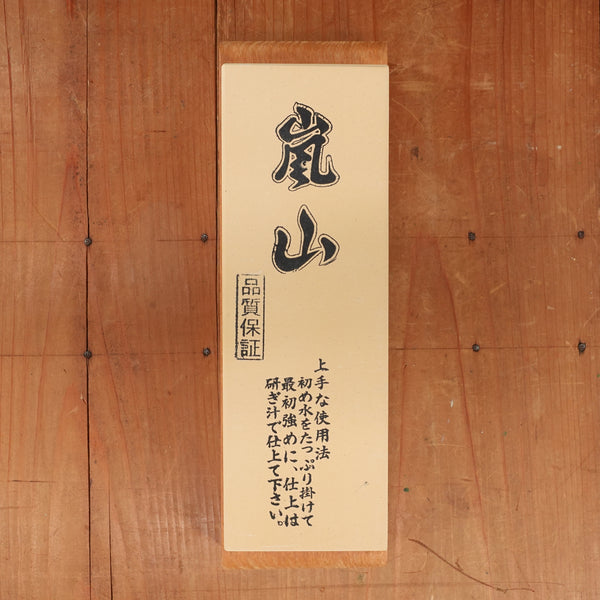
Arashiyama #6000 Whetstone With Nagura Stone and Wooden Base
- Regular Price
- $99.51
- Sale Price
- $99.51
- Regular Price
-
- Unit Price
- per
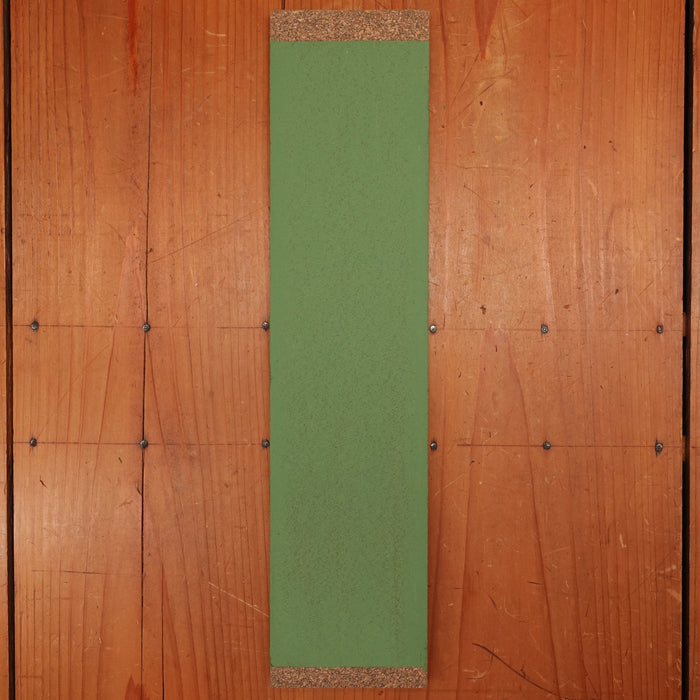
Bernal Cutlery Monodiachrome™ Precharged Deburring Strop
- Regular Price
- $58.54
- Sale Price
- $58.54
- Regular Price
-
- Unit Price
- per