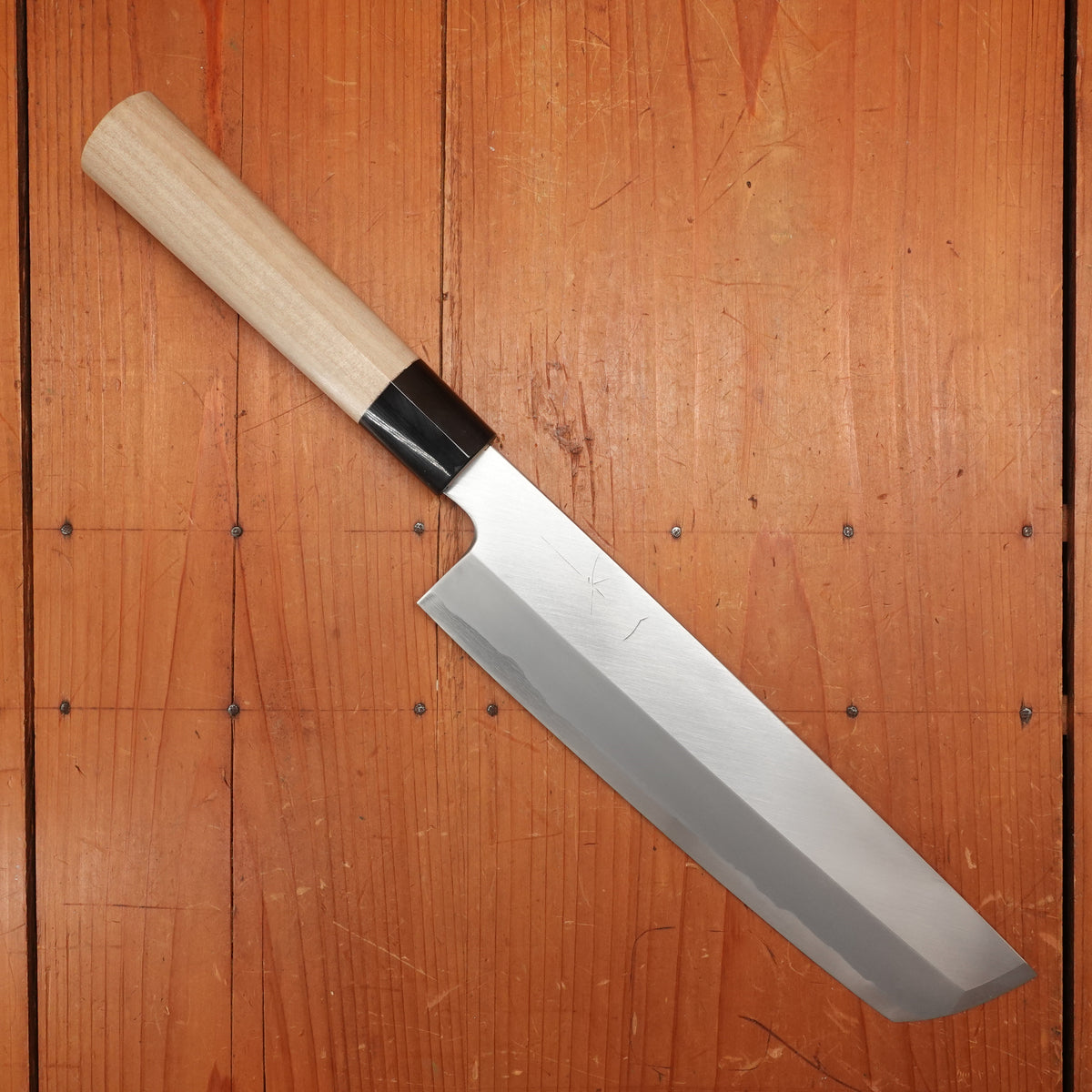
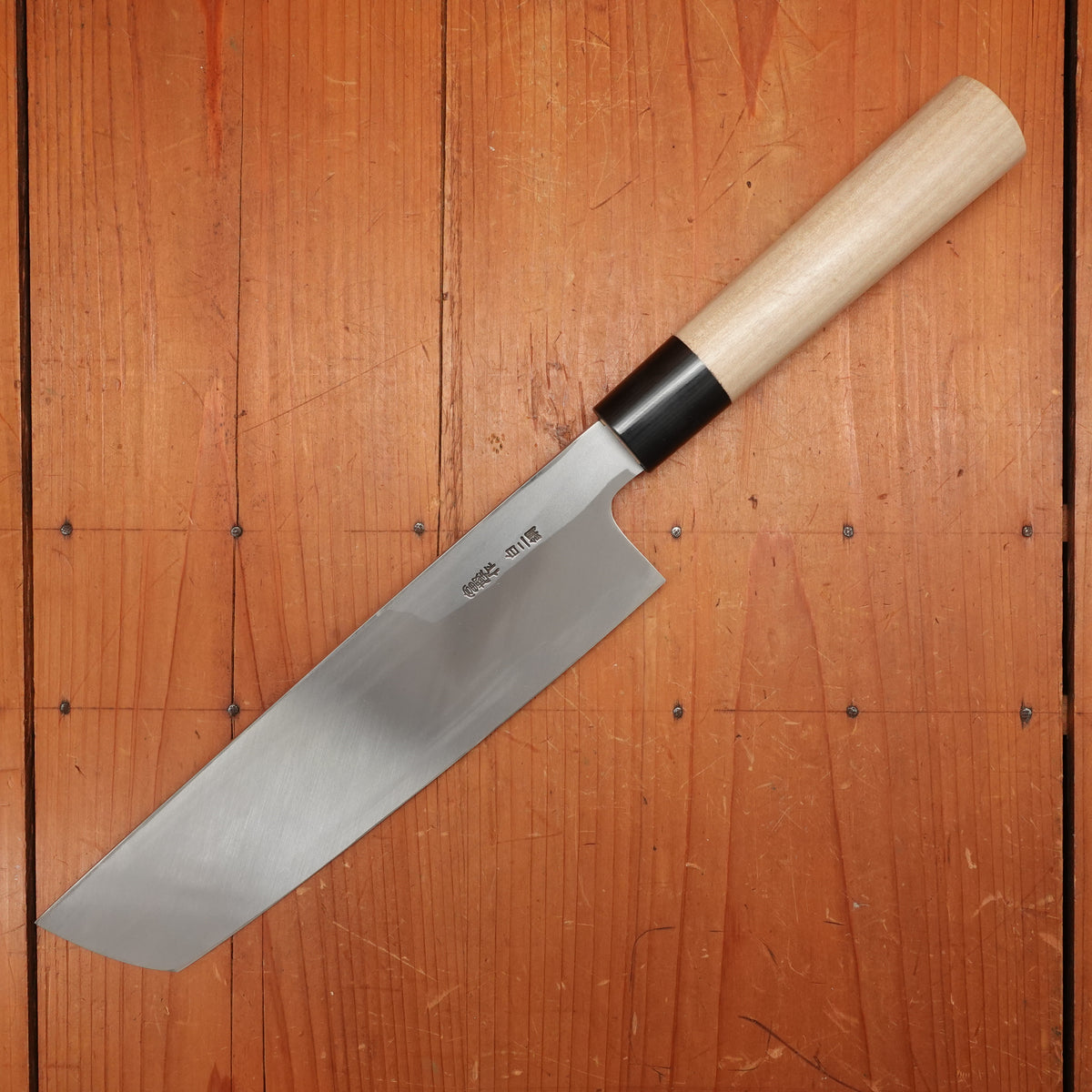
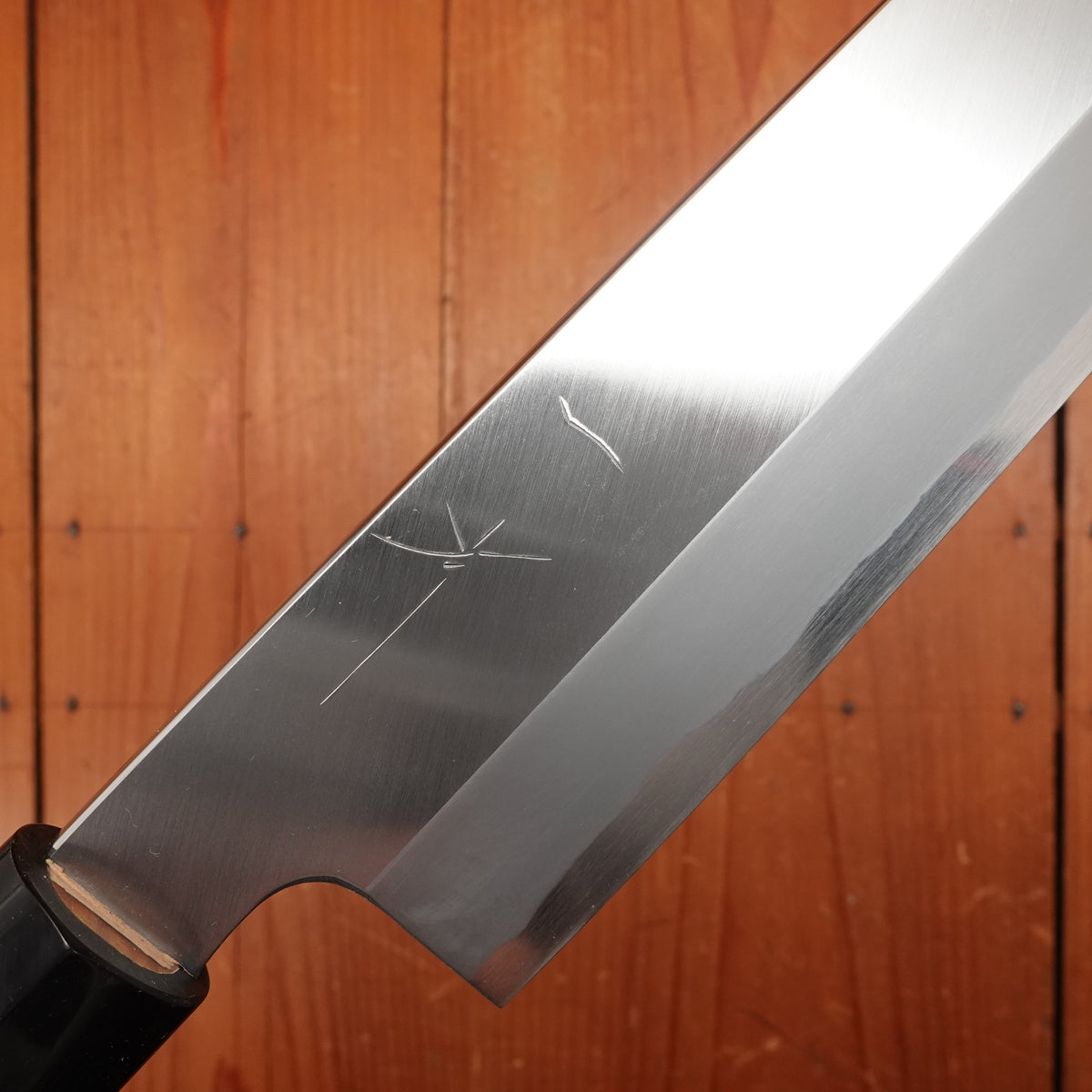
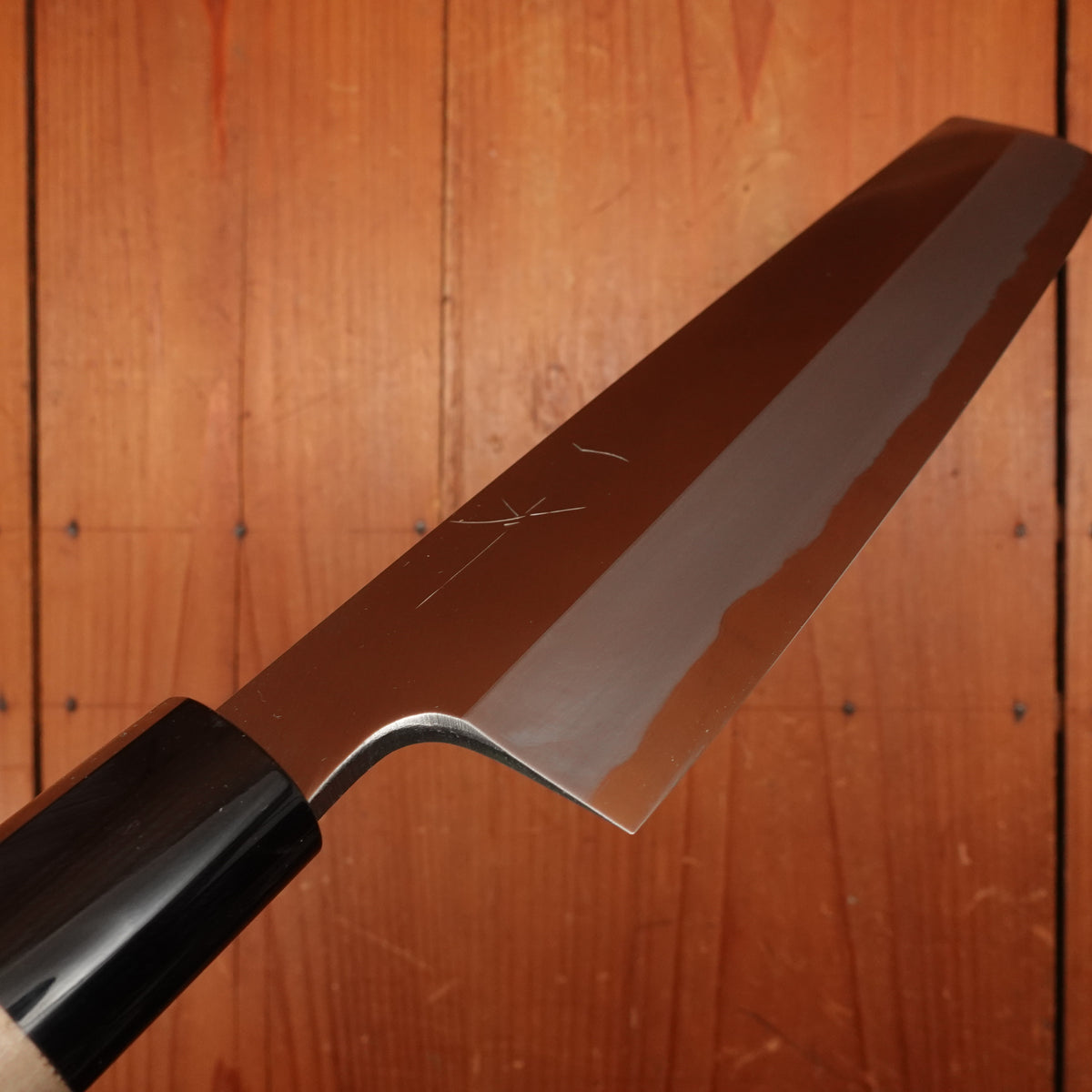
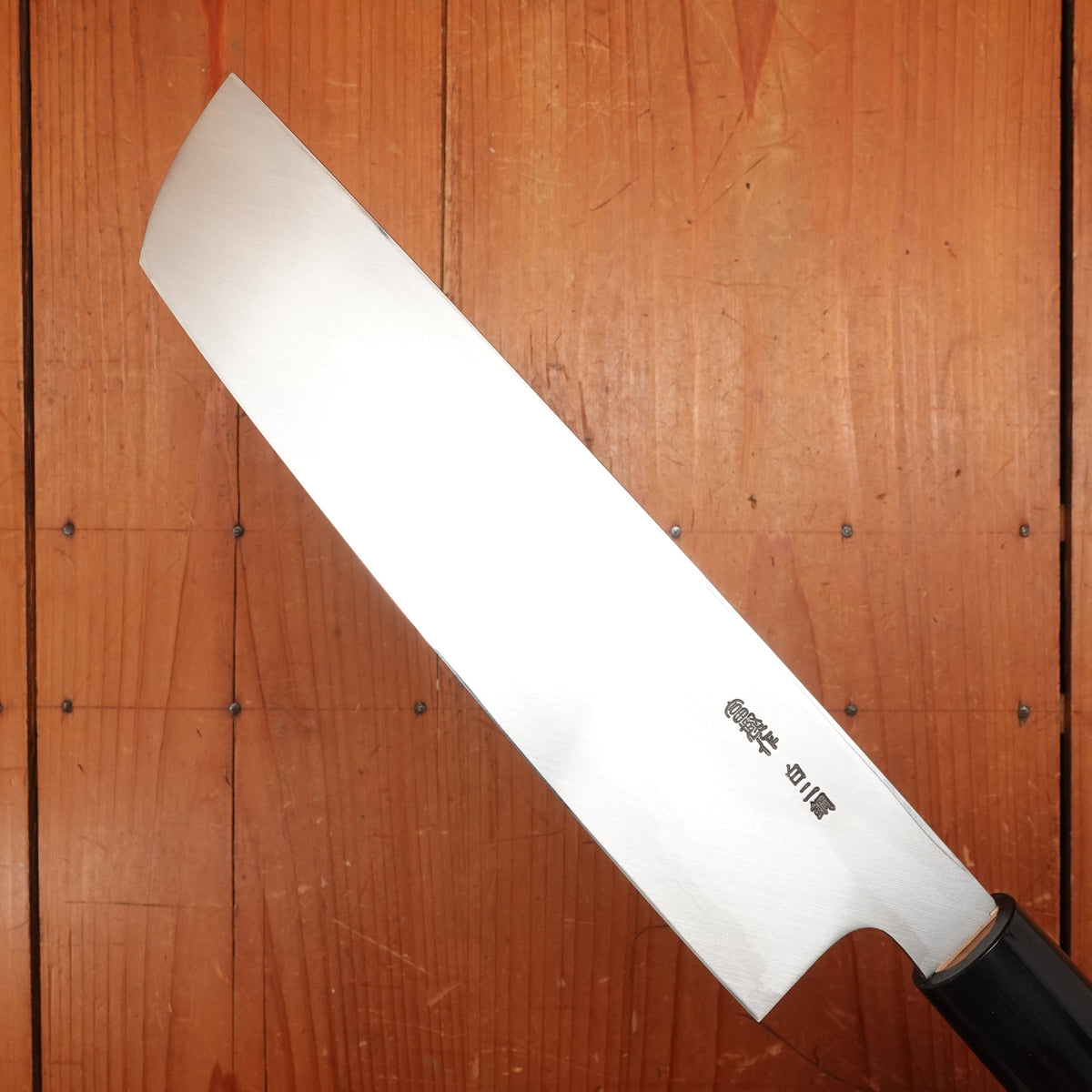
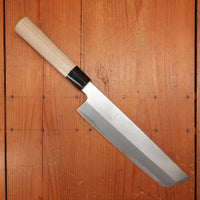
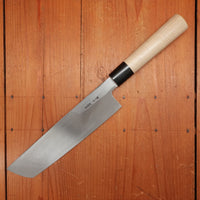
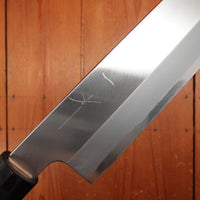
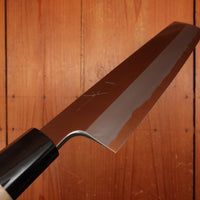
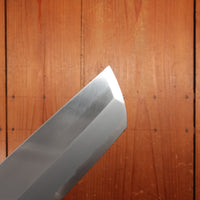
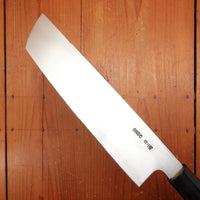
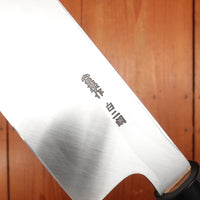
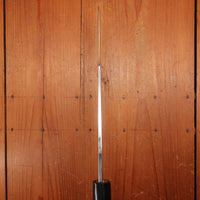
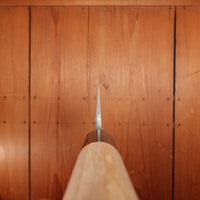
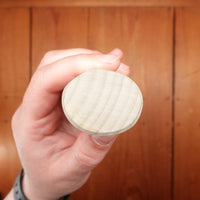
Hitohira Togashi 240mm Hamokiri Shirogami 2 Ho Wood (D-Shape)

Regular Price
$517.00
Sale Price
$517.00
Regular Price
Sold Out
Unit Price
per

Shipping calculated at checkout.

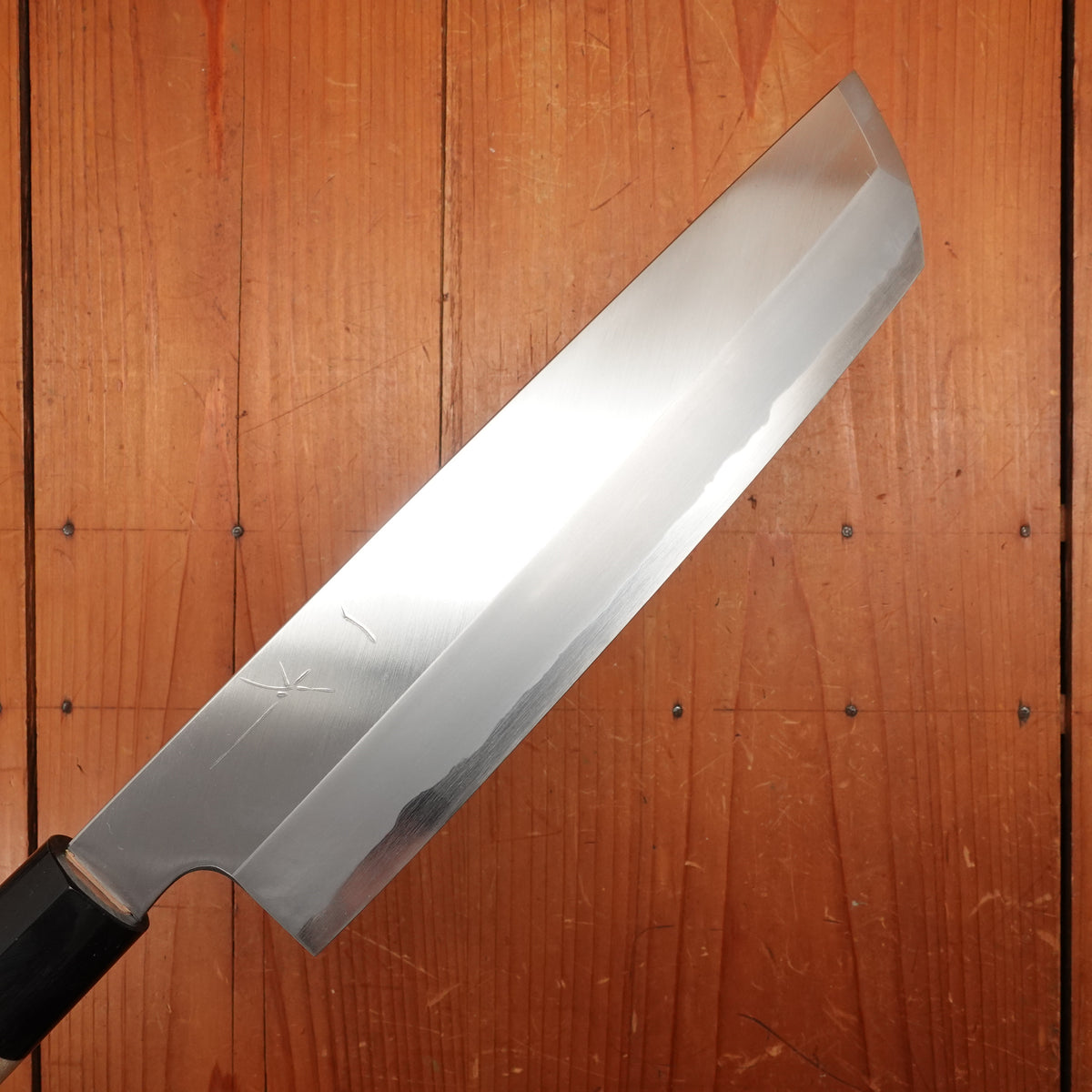
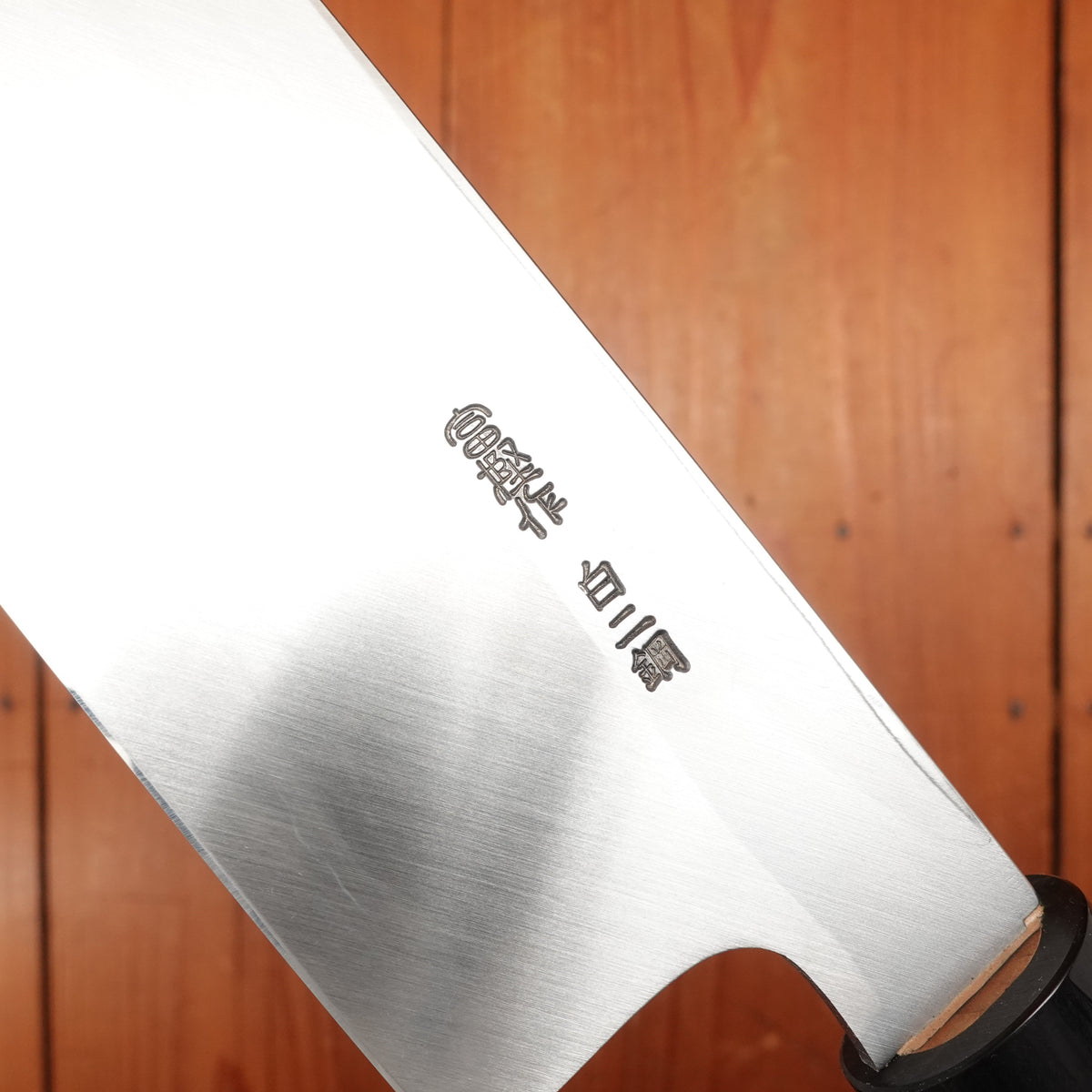
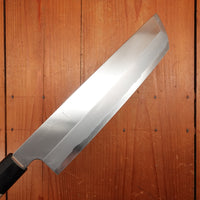
Hand made in Sakai, kurouchi finished iron clad shirogami #2 forged by dentoukougeishi master smith Kenji Togashi and expertly ground by his son Kenya.

These are ground with a fine flat kireba, for users that are somewhat newer to using a deba (under 5 years experience) adding some curvature to the main bevel will help to strengthen it.

Fish Butchery

Designed specifically for fish breakdown.

Light Butchery OK

Safe for use around bones.

Iron Clad Carbon

Reactive core steel between two reactive layers.

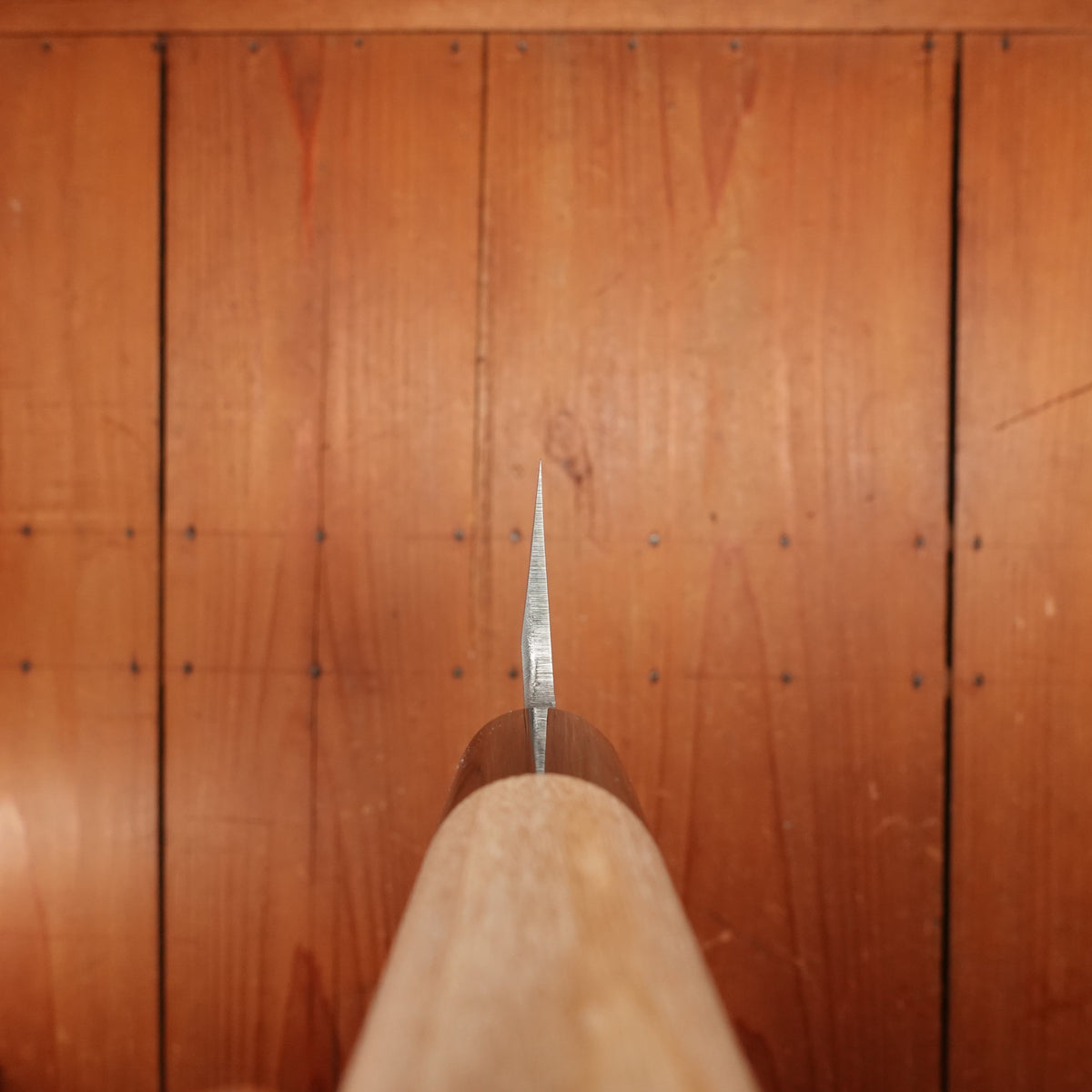
Single Bevel

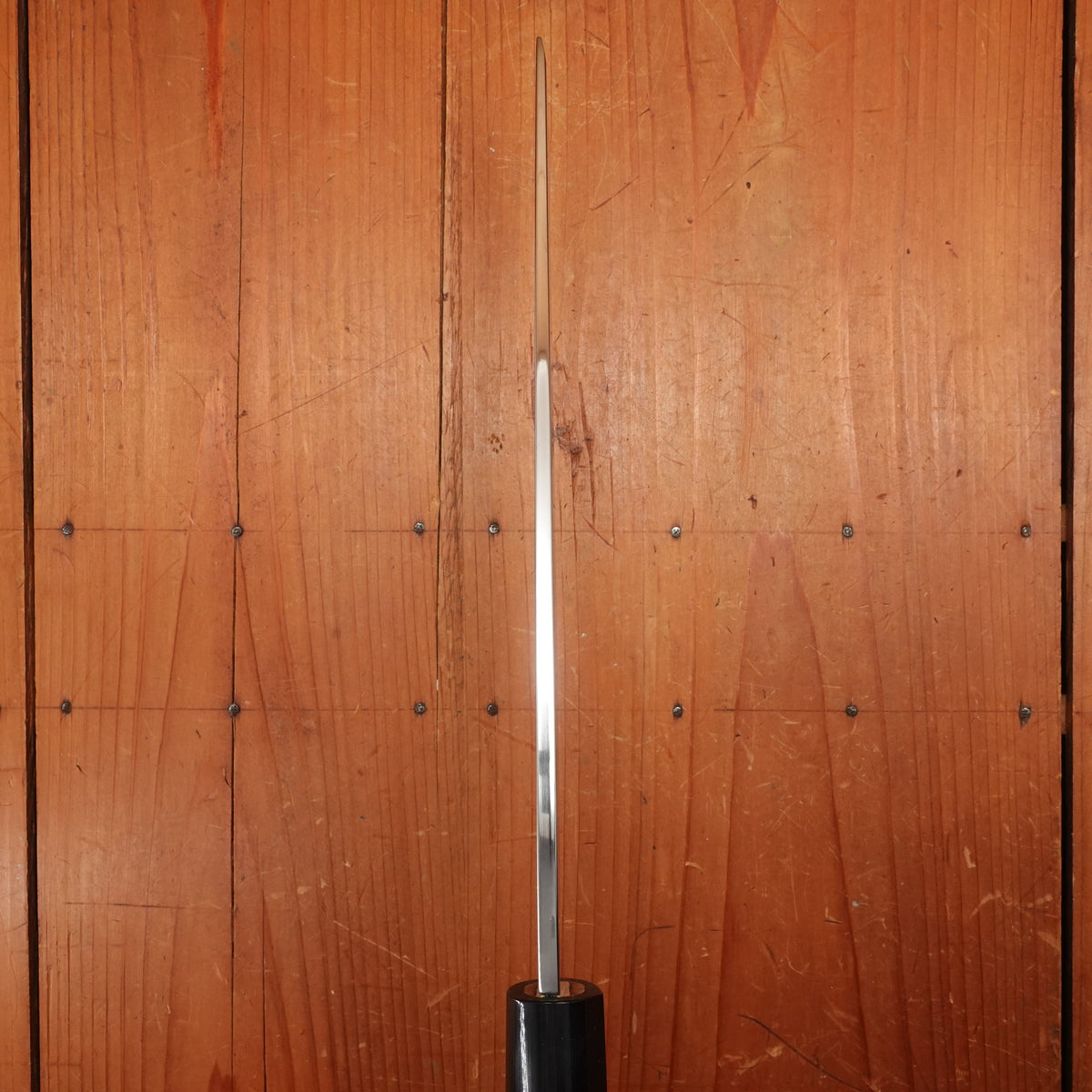
Wide bevel on outside face—hollow grind on inside face.

Right-Handed

Made for use in the right hand.

Hamokiri

A hamokiri is a specialized Japanese knife designed for preparing hamo (pike conger eel), a fish prized in Kansai cuisine and known for its fine pin bones that run parrallel to the skin and resilient flesh. The hamokiri features a thick, heavy spine and a stout blade that allows the cook to make precise, rhythmic cuts deep into the flesh to mince the pin bones without severing the skin, a technique essential for hamo no honegiri (bone-cutting).

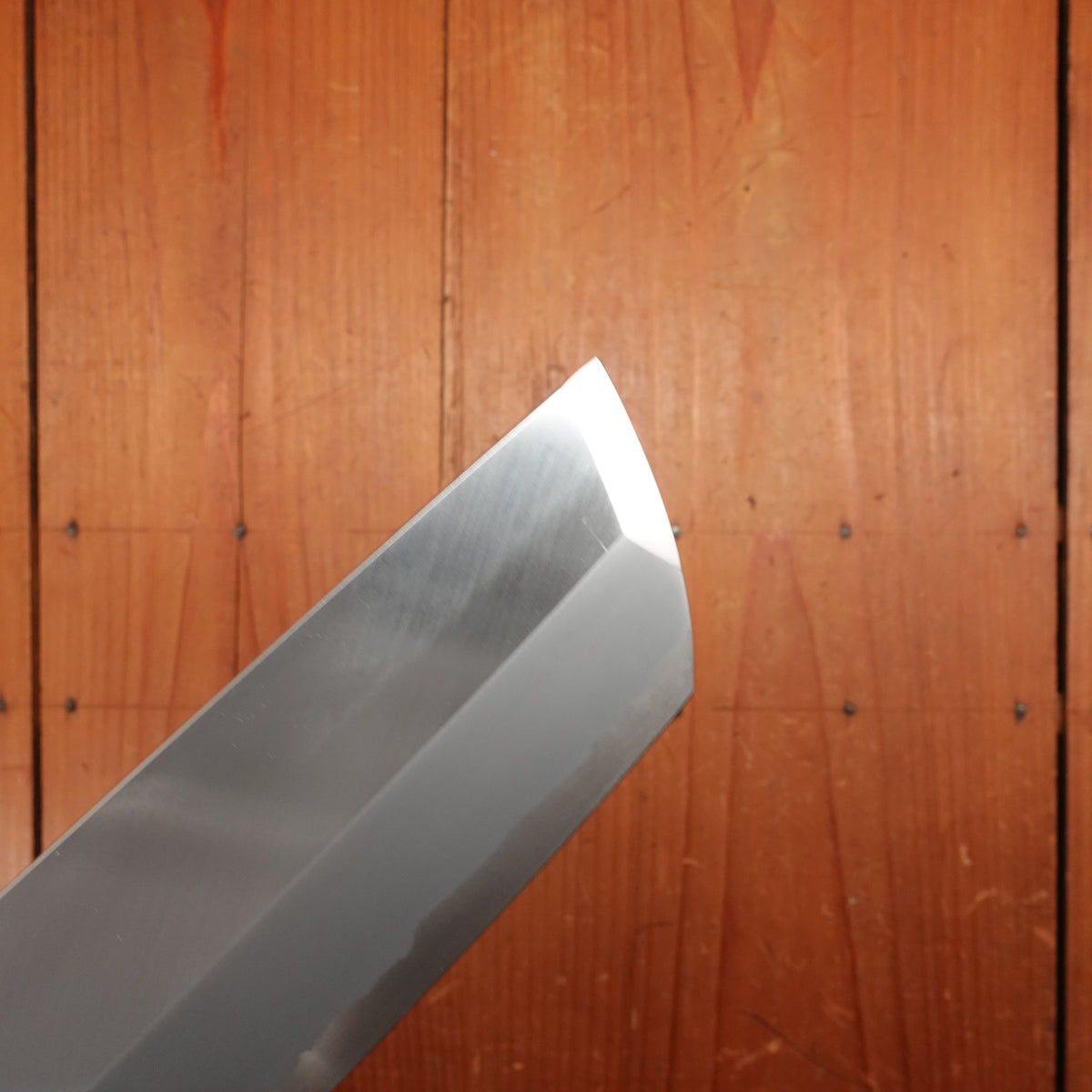
The blade geometry prioritizes weight, control, and durability over finesse. Its mass helps carry the edge cleanly through tough flesh and tiny bones, while the relatively short height and reinforced tip offer stability during repetitive chopping motions.

Listed Length: 240mm
Total Length: 377mm
Edge Length: 211mm
Heel Height: 55mm
Spine Thickness: 4.2mm
Weight:
Orientation: Right-handed

Blade Type: Iron Clad Carbon
Steel Type: Shirogami 2 (White Paper #2)
Steel Hardness (HRC): undisclosed
Maintenance: More Attention
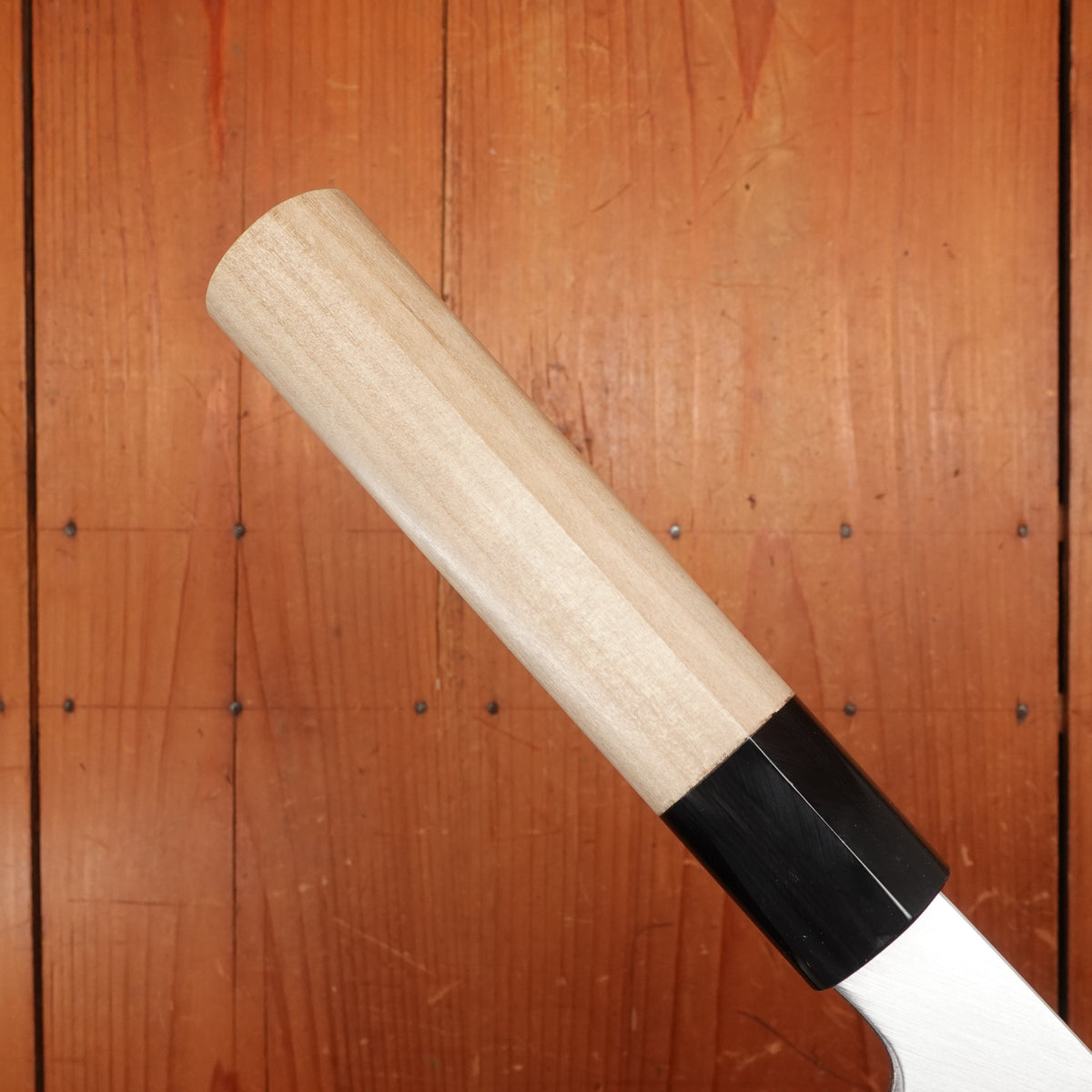
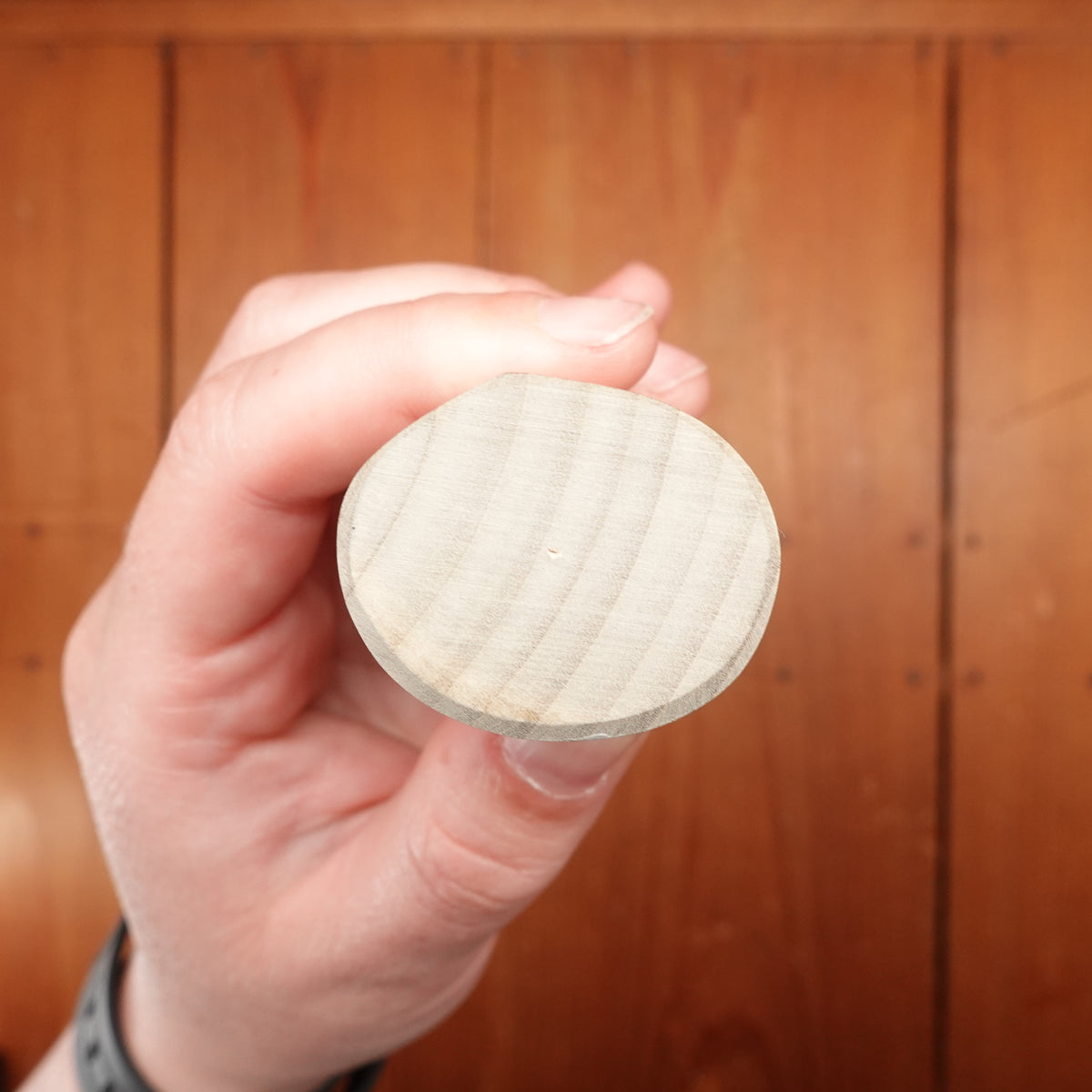
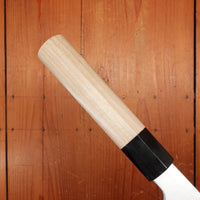
Handle Type: Japanese (wa)
Handle Material: Ho (Magnolia) & Horn Ferrule

  • This is a reactive carbon steel knife made specifically for use in the left or right hand. Be sure to check handedness before purchase.
  • Expect oxidation (color change, staining, spotting) with use.
  • Hand wash and towel dry immediately after use. Do not use a dishwasher or air dry.
  • Remove any surface rust with a light abrasive.
  • Avoid lateral pressure or forceful use—this can damage both the edge and the ura (flat side).
  • Avoid bones to avoid damage.
  • Use only on wooden cutting boards.

Fine - Single Bevel

Sharpen on whetstones starting around 1000 grit for micro-bevel work or use a full progression from 400-6000/8000 when lowering the kireba. Don't over-sharpening the ura; only work long enough to flip the burr and polish. Do not use honing rods; instead, strop for burr removal and for as-needed edge maintenance with a borachrome (medium-fine finish) or chromium (fine finish).

About Kenji Togashi

Sakai, Osaka, Japan

Kenji Togashi is a blacksmith from Sakai with over 55 years of experience. Starting his craft in 1967, Togashi became a certified Dentoukougeishi (Traditional Craftsman) in 1996 and was later honored as a Master of Traditional Crafts for his expert quenching technique. He is especially revered for forging impeccable honyaki knives – single-steel blades considered the pinnacle of forging skill. Togashi’s outstanding work earned him the Order of the Sacred Treasure. Working alongside his sons in a multi-generational forge, Togashi continues to uphold Sakai’s knife-making heritage, producing masterpieces treasured by chefs and collectors.

See All Kenji Togashi